Whether in-person or remote – they always felt like an interruption; A distraction from what I was supposed to be doing. A disruption to productivity. One single 60 minute call could effectively de-rail an entire day.
Over time, I’ve adopted various strategies to limit the number of calls on my calendar, and deliberately batch them to mitigate the heavy cost of context-switching.
Such an aversion to calls can often be seen as laziness, but the truth is that not everybody operates in the same way, and I’ve come to realise that rather than a deficiency, the manner in which my brain perceives time, concentration, and obligations is just a bit different from others. (While not exactly the same, there’s a good article that touches on the idea of the Maker v. Manager schedule).
To some end this has been a blessing. For one thing, I have managed to avoid the trap that many mangers or senior people seem to fall into – with constant, back-to-back meetings attended out of a self-imposed sense of expectation, sucking up all of my available time.
However. Meetings are also unavoidable. And dare I say it, also sometimes beneficial. Especially if you work remotely – as it provides an opportunity to communicate ‘face to face’, rather than asynchronously over text – with all of the associated positives. As a result, I have continued to search and experiment with different ways to hopefully lessen the cognitive burden.
Time Blindness
Something I discovered was that my natural inclination is to fixate on any scheduled calls as the ‘big thing’ for that day, which in my mind then squeezes out the ability to do anything meaningful on either side. A kind of time blindness.
I tried different ways to combat this. For example: Tagging every item on my to do list with an estimated time of completion. The idea being that this would force my brain to realise that there was time to do other tasks, even if it felt there wasn’t. However, nothing really stuck.
The closest I came was with a physical daily planner. By laying out the ‘big things’ I had to do on paper, I could clearly visualise the amount of time left – which was always much more than expected.
As much as I love the tangibility of that… it is also inherently inflexible. Schedules change. Things move around. And you can’t easily change what has been commited to paper. So… I created my own digital version.
The Daily Planner
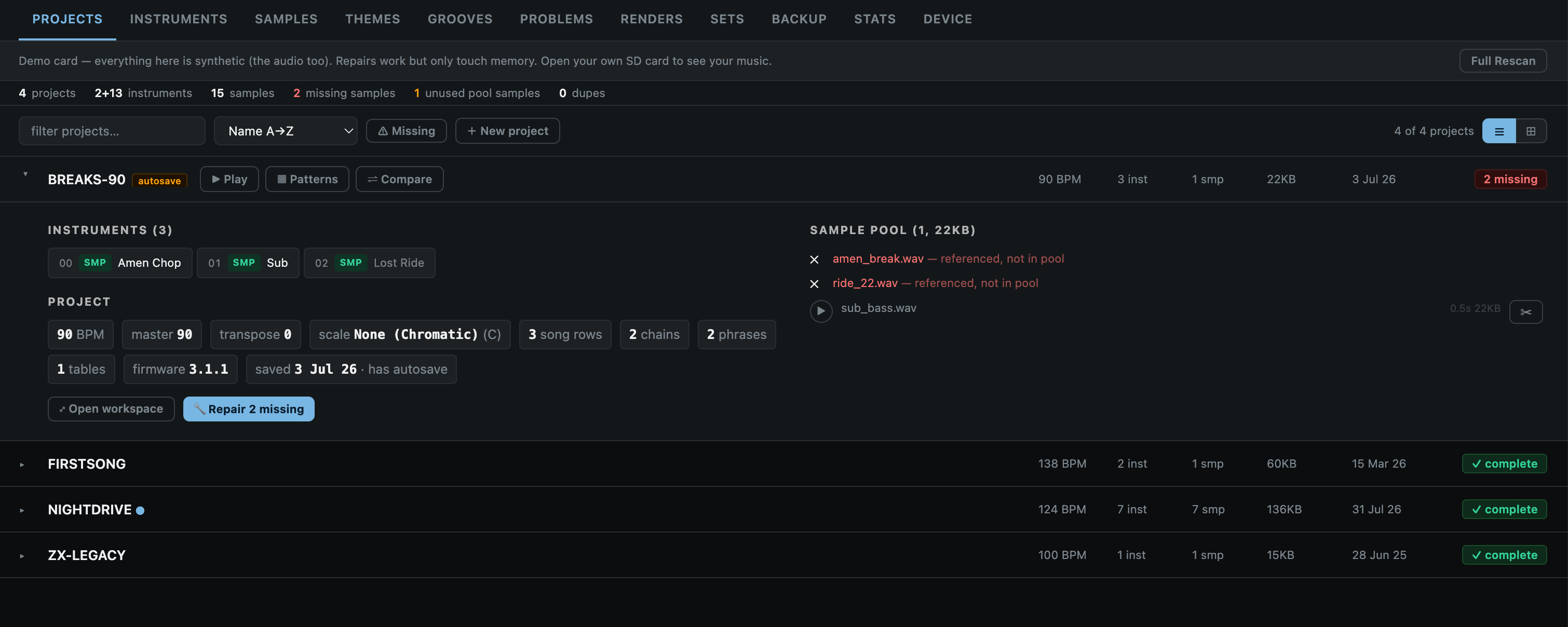
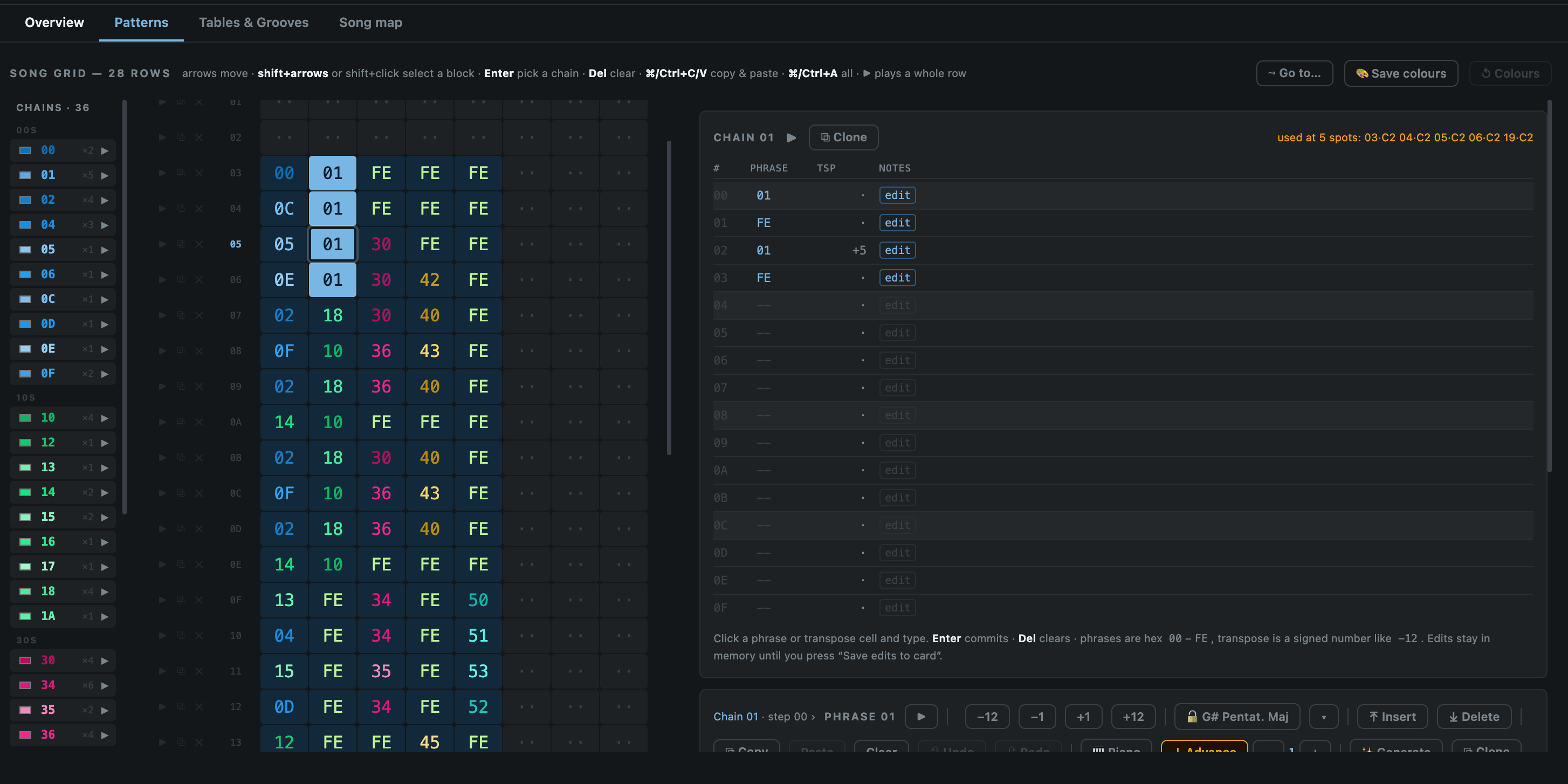
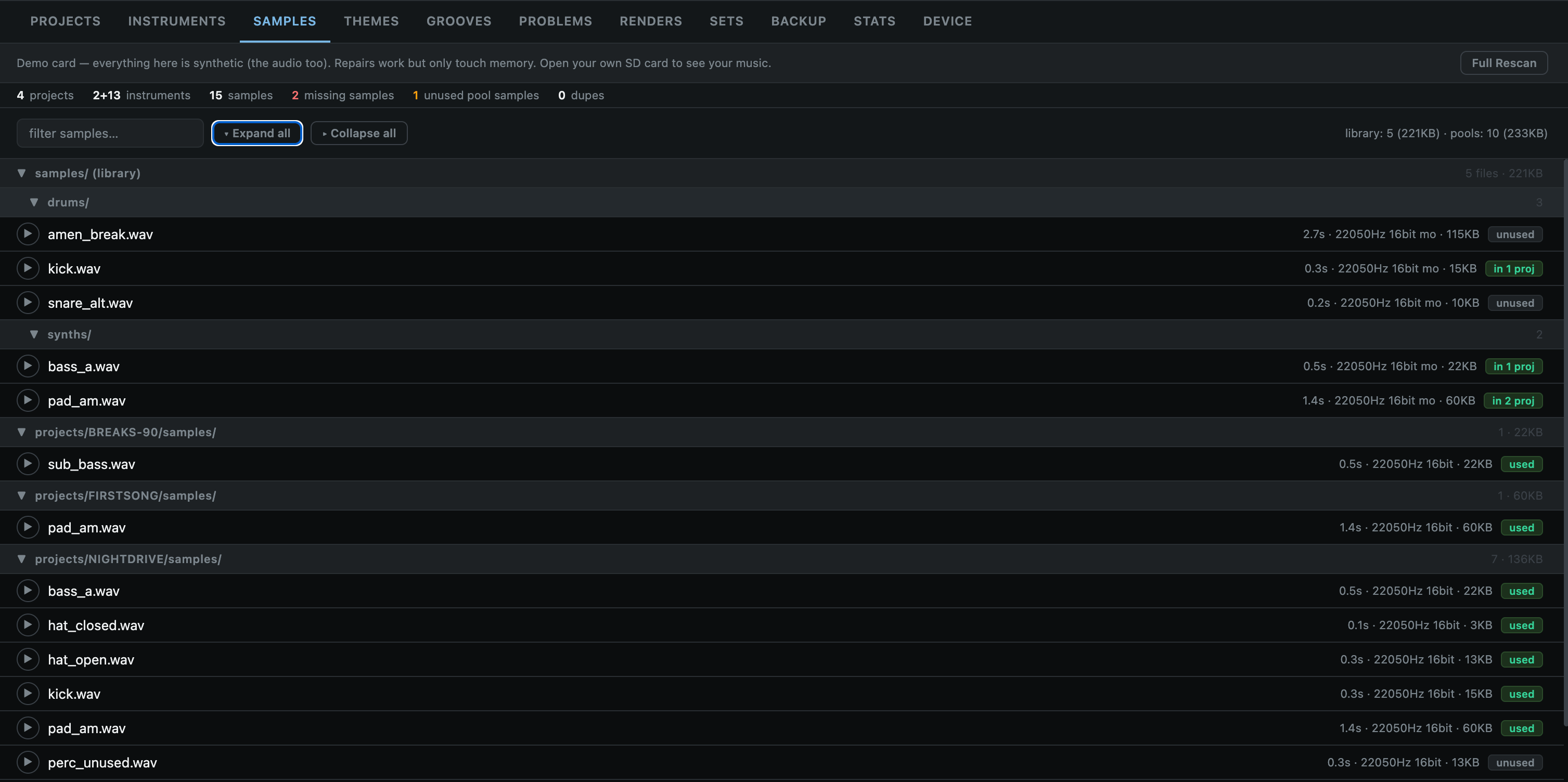
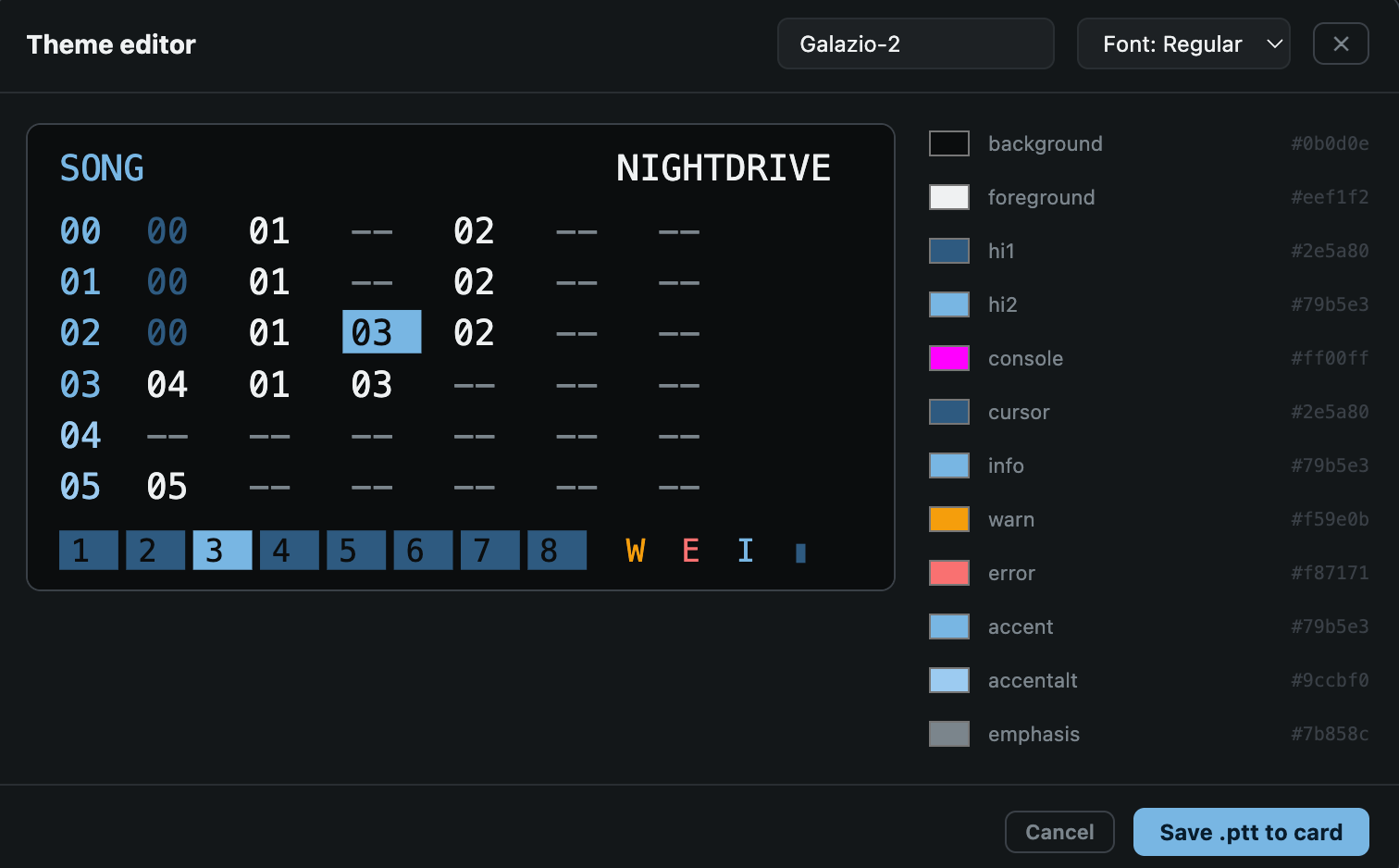
Holding Pattern is a bespoke daily planner that I created with Claude Co-Work.
It pulls in data from my personal and work calendars via Google oAuth, and allows me to augment these bigger ‘events’ with smaller additional daily ‘tasks’ that aren’t important enough to warrant their own calendar entries.
Similar to my old-school paper planner, the tool allows me to visualise each day in a way that clearly demonstrates how much time there actually is – rather than fixating on the one ‘big’ meeting or call.
Fake data!
Another feature I built-in was the ability to tag, and then check-off or track different events. This produces a list of completed tasks, demonstrating at a glance how much (or little) I have done over any given period, and providing a source for producing bi-weekly personal updates.
I need to do more, clearly.
There are definitely tools out there that do various bits of what this tool does. Calendars, To Do Lists, Planners – but none of them combined all of the features I wanted in a single place – without additional fluff or complexity.
Implementation
The planner took a day or so to build, and is hosted on GitHub Pages, served via a custom subdomain to make it easier to remember.
It relies fairly heavily on Google oAuth – both to connect to my calendars, but also to synchronise the additional ‘task’ and settings data to Google Drive. That, coupled with the bespoke personal nature means that it is unlikely to be much use off the shelf to anybody else. But… perhaps it will help to spark some ideas for folks out there who have similar struggles with scheduling. The project source is available on GitHub, should you want to poke about.
While there are certainly many major questions about the advent of AI technology, I can’t help but be impressed and excited about the potential it provides for individualised solutions like this.
As ridiculous as the Game Boy camera may be, it is also strangely charming.
Outside of its obvious limitations, one of the big challenges has always been how to get your pictures off the camera in a usable format, since it was obviously never designed to shoot, store, or transfer images via SD card.
Various clever methods have been developed by the community over the years, and often involve extracting the images from the camera’s save file. There are some great tools available for this, but their feature sets are often fairly limited. While I liked the whole GB Camera a e s t h e t i c, I also didn’t want to spend ages in Photoshop afterwards, upscaling and stylising them every time. So… after rediscovering the format when I bought an Analogue Pocket, I thought I would put the development in AI technology to use… to build a dedicated Game Boy Camera image extractor and processor. Hence: the DMG Darkroom.
DMG DarkRoom: GB Camera Companion
The concept of the app is simple: You load up a Game Boy Camera .sav file, or save-state via a connected Analogue Pocket, From there, you can then view, edit, and export the pictures with a variety of different options that are specific to the lofi nature of the beast.
The features include…
SAV & SD card loading – Open Game Boy Camera .sav files directly, or auto-scan your Analogue Pocket SD card
Photo grid – Browse all 30 photo slots with adjustable thumbnail size, solo view, lightbox, and fullscreen presentation mode
100+ colour palettes – DMG, GBC, SGB, Lospec community palettes, plus a custom palette editor with import/export
For a long time, I’ve been able to use and enjoy my Game Boy camera thanks to the work put in by other folks in the community to keep them alive. Hopefully this project… with all of its added features proves just as useful to someone else.
Every year I share details of the books that I have read over the past twelve months.
In 2025, I apparently read 28 books – up from 22 in 2024. I have no idea why the graph shows 28. It’s wrong.
According to Goodreads… that means a total of about 8274 pages. Up significantly from the previous few years…
The full list from 2025 is as follows:
Run – Blake Crouch (2011)
Pines – Blake Crouch (2012)
You’re Doing It Wrong – Michael M (2024)
Wayward – Blake Crouch (2013)
Last Town – Blake Crouch (2014)
Four Thousand Weeks – Oliver Burkeman (2021)
Careless People – Sarah Wynn-Williams (2025)
Adults in the Room – Yanis Varoufakis (2017)
Talking to My Daughter About the Economy – Yanis Varoufakis (2013)
May You Have Delicious Meals – Junko Takase (2022)
El Infierno – Pieter Tritton (2017)
Little Eyes – Samanta Schweblin (2020)
Exit Interview: The Life and Death of My Ambitious Career – Kristi Coulter (2023)
Collaborating with the Enemy: How to Work with People You Don’t Agree with or Like or Trust (2017)
52 Times Britain was a Bellend: The History You Didn’t Get Taught At School – James Felton (2019)
Mythos: The Greek Myths Retold – Stephen Fry (2017)
Corker – Hannah Crosbie (2024)
We are the Nerds – Christine Lagorio-Chafkin (2018)
Cultish – The Language of Fanaticism – Amanda Montell (2021)
The Good Enough Job: Reclaiming Life from Work – Simone Stolzoff (2023)
Anyone Can Do It: My Story – Duncan Bannatyne (2008)
Fluent On The First Try – Federica Lupis (2020)
Mania – Lionel Shriver (2024)
I’m Starting to Worry About This Black Box of Doom – Jason Pargin (2025)
John Dies in the End – David Wong (2007)
Rumours of my Demise – Evan Dando (2025)
The Let Them Theory – Mel Robbins (2024)
Kitchen Confidential – Anthony Bourdain (2000)
—
This year started off with me reading and re-reading a number of Blake Crouch novels. I had recommended a list of dystopian books to a friend, and needed to refresh my memory so we could speak about them, and I also finally read through the Wayward Pines series – something I had initially put off, as I had already watched the TV show.
Things started to slow down a bit in February and March – at least in terms of completed novels – as I ended up reading a number of books simultaneously.
For more thoughts on the specific books, click through to read more.
Every year I publish a list of the books that I’ve read throughout the last twelve months. In 2023, I read a total of 29 books, which isn’t bad… but not quite as many as I would like. The total for 2024 was a shameful 22. However, I was pretty close to the number of pages read, with a total of 7,066 in 2024, versus 7,210 in 2023.
The full list is as follows:
Abandon – Blake Crouch (2023)
The Cliff House – Chris Brookmyre (2022)
A Mango Shaped Space – Wendy Mass (2005)
Why Scots Should Rule Scotland – Alasdair Gray (1997)
How to Think Like a Roman Emperor: The Stoic Philosophy of Marcus Aurelius – Donald J. Robertson (2019)
What If?: Serious Scientific Answers to Absurd Hypothetical Questions – Randall Monroe (2014)
Fluent in 3 Months – Benny Lewis (2014)
Three Body Problem – Liu Cixin (2006)
The Dark Forest – Liu Cixin (2008)
Death’s End – Liu Cixin (2010)
The Stranding – Kate Sawyer (2021)
The Measure – Nikki Erlick (2022)
The Secret DJ – The Secret DJ (2017)
Early Riser – Jasper Fforde (2018)
The Trial – Franz Kafka (1925)
Shades of Grey – Jasper Fforde (2009)
How to Find the Right Words: A guide to delivering life’s most awkward messages – The School of Life (2021)
Wednesday Is Indigo Blue: Discovering the Brain of Synesthesia – Richard E. Cytowic, David Eagleman (2009)
The Concise Mastery – Robert Greene (2014)
Strong Female Character – Fern Brady (2023)
Smith Happens – Sammy Horner (2017)
Oxygen – Seth Rain (2022)
Overall, a pretty solid offering. I especially enjoyed the Three Body Problem series – something I was turned on to after watching the Netflix show, though the last book was pretty bonkers. Jasper Fforde was another great discovery, with uniquely surreal dystopian novels. I re-read The Trial by Kafka after being inspired by a trip to Prague, and devoured Scottish comedian Fern Brady’s auto-biography. This year there was a clear shift away from non-fiction or work related books, which wasn’t strictly intentional, but something I had loosely wanted to see happen.
For more thoughts on the specific books, click through to read more.
As I prepare to head off on sabbatical later this year, I realise that while I posted my plans for my first sabatical, I didn’t actually share my reflections publicly on return. Instead, I posted on one of the many internal websites that we have at Automattic. Re-reading it recently, I thought that it was worth pulling this out onto my own blog for posterity. Below is what I wrote up back in June of 2019 for my colleagues, after going back to work (nb. that it has been slightly amended to remove references to a8c specifics).
Hello. I have returned from the sabbatical oasis. In many ways it feels pretty good to come back into fold, as no matter how great the sabbatical is, it still feels strange to be outside of the everyday Automattic community. That said, it is also a bit of a shock to the system; feeling akin to turning on a bright light in a room after you’ve been lying in the dark, so please bear with me over the next week or so while I catch up and readjust. It will take me a bit of time. 🙂
Before I went away, I was pretty disappointed that I would miss RightsCon in particular, as it is always a fairly motivational time. In retrospect I am glad I didn’t go, as it would almost definitely have limited what I got out of the block of time away.
As is customary, here is a recap with some details of what I got up to, as well as some general reflections, and thoughts about what coming back means. I had wondered about whether I should hold off on this until I had been back for a bit, but changed my mind. It is also a bit longer than I anticipated, so you have been warned!
Sabbatical observations
The first week I slept a lot, and felt guilty about it because I wasn’t doing very much, and didn’t want to waste the time. I realised though that my body was clearly just catching up on rest, and winding down to actually shut off properly. It doesn’t just happen instantly.
My life is usually so packed and rushed all the time that being able to just take the space to breathe and not rush things was great.
As part of that, I realised how many commitments I have outside of work, and how much time and energy they take up.
This also helped me realise what exactly I was spending my time on, and reassess things accordingly. In other words, cut down on commitments that were taking up a disproportionate amount of energy and space – as well as to make room for other things that I had been neglecting. I offloaded some responsibilities to other people, and didn’t feel the need to always stay up to date or in control of things as I usually would.
The first week I spent in Tokyo (which was just the second week of the sabbatical itself) was especially good. I was on my own, which I had been a bit apprehensive about, as I don’t really enjoy totally solo travel all that much. As it turned out, it was the perfect way to really begin the sabbatical properly. I would literally spend full days just walking for hours and hours, speaking to nobody, taking in everything. I didn’t have to be anywhere or do anything or look after anybody or answer to anyone. It felt like I had gone on some kind of silent retreat, and it was brilliant. Genuinely relaxed and free.
After three weeks things began to feel weird, as it was about as long as a significant holiday – but I knew I wasn’t going back any time soon. That caused some cognitive dissonance, which wasn’t completely unpleasant.
I realised that it was okay to have days where you don’t do much. You don’t need to be doing things constantly to make the best use of the time. That said…
I found myself breaking into a routine a couple of times – where I would just go to the gym, go to band practice, etc – and I didn’t want that to happen. So… I took the opportunity to say yes to things that I wouldn’t normally ever have time to do, or would put off (see more below).
What I actually got up to
Before I went away, I outlined the things I wanted to do over the three months. It really boiled down to allowing more time for the things that are important to me in life that I never usually get to focus on. Making music, reading, writing, travelling, and seeing friends. I deliberately kept them fairly broad to avoid tying myself into specific things and feeling bad if I didn’t get round to them. As it panned out, there were some things I didn’t get round to as much as I would have liked, but there was always something else that took its place. For example, I didn’t really play much guitar – but I did end up starting a new band and learning bass. I didn’t make much electronic music either, but I did rediscover a love for film photography, and developed a whole bunch. So it is swings and roundabouts. Either way, I felt like I made the most of the time I had as best as I could, which is what’s important.
Bought a bunch of really nice cameras I had wanted for a long time, and learned lots of things about them.
Shot lots of pictures, mostly on film.
Started developing again, learned a bunch of new things, and processed 50 rolls in total. Also got a new scanner to replace mine… which was over 10 years old!
Shot on motion picture 500T film for the first time successfully (a bit more of a complicated chemical process than regular film).
Did a few DJ sets, with varying levels of success. Lessons learned include always having a backup audio source, and checking that your laptop charger is actually plugged in properly.
Visited my parents in Canada, and spent the time touring vineyards, drinking cider, and lying in the sun with a book.
Drove a friend’s band down to London to play a gig.
Read a whole pile of books (around 16), and enjoyed being able to just read for hours at a time because I enjoyed it again, as opposed to cramming it in for ten minutes before falling asleep at night.
Spent some time doing some legal academic work… including speaking on a panel in Edinburgh which was discussing defamation law reform in Scotland and meeting some friends from Twitter who were in town for a conference. I also finished off my second journal article, which I found out today has been accepted for publication by the European Intellectual Property Review.
In total I spent over half the time away from Glasgow, which I think is pretty good going. There are things I would like to keep up, and things I would like to start doing which I never did, and that’s actually okay. One of the points I had to keep reminding myself of was that the sabbatical isn’t the be all and end all – and not everything needs to be completed. There will be more time off in future!
Coming back
This is the trickiest part. Coming back from three months off is always going to be difficult, not least because of the catch up and changes to routine that are involved. Fears over how or where you will fit in are (apparently) normal, as are questions about whether you’ve fallen behind, and what the future will look like. I am personally very pleased and grateful that I’ve been able to take the time off at this point in my life; to spend it on existing, thinking, and creating. I am also glad to be able to come back to a community of people that I have a lot of respect for.
Over the next week or so I am going to take the time to gradually get back into the swing of things. Clearing out my e-mail inbox and pings will take a wee bit of time, but more importantly, I want to get a feeling for how things have moved on while I’ve been away, where the team is at, and where I can best contribute – including whether or not my role should shift to focus on different areas. I’m looking forward to the challenge.
Every five years, Automattic encourages its employees to take a three month, paid sabbatical. Different people make use of this in different ways. Some undertake once-in-a-lifetime journeys; others indulge in the realisation of passion projects; while others still ‘just’ relax and unwind. The breadth and diversity of these choices reflect the attributes of the folks themselves, and it’s always really fascinating to hear their stories and experiences when they return. Irrespective of any individual preferences, there’s no doubt that the sabbatical provides an incredible opportunity to pause, reflect, and ultimately explore the value and meaning of a precious commodity: time.
Prior to heading off in 2019 for my first sabbatical, I wrote a post on this very blog, talking about what I hoped to do, or ‘achieve’ (if that is the right word) over that period. As I’ve now been part of the company for over a decade (gasp), I am therefore eligible for my second – and will be taking it later this year.
As I started to think about what I wanted to do this time around, it struck me just how similar the goals and desires I came up with were to those that I had back in 2019. In fact, pretty much every single one of the 10 things that I laid out in my prior list could easily equally apply again now – and probably will actually – to a greater or lesser extent. Some people might find that boring, or even concerning. After all, why on earth would you choose to do or focus on the same things, rather than try something entirely new?
I do understand that inclination – and want to ensure that I allow space to experience and explore novel situations. However, I also want to really deliberately make time for those parts of my life that either bring me comfort, or which I am passionate about. The types of thing which I love doing, but rarely get the chance to sink into in the manner which I would like.
In some ways I think about this like deciding on a restaurant to eat at. Going to a new place can be rewarding, but also potentially disappointing – and sometimes you just want to go to your favourites. The tried-and-tested. The familiar and dependable. Often, you might realise that you haven’t even been there for months anyway. I’m aiming for some balance, with that in mind.
While the sabbatical is still a few months away, I wanted to outline in advance some of the goals, aims, and expectations I have, as they will help shape and guide the decisions and plans that I make. So, here they are:
Go places. Getting away from Glasgow to explore and experience different parts of the world might be a predictable entry, but one that is also really important. In practice this will mean returning to places I have been before and enjoy – such as spending a few weeks in Tokyo and Seoul – but also discovering others for the first time (such as Prague). I am hopeful that other opportunities will also present themselves along the way, and I’ll be in a position to grab them.
Enjoy Scotland. Somewhat in contrast to the above, I would like to savour the place that I live. Scotland can be an incredible place in the summer, and I haven’t really been around to make the most of it in years gone by. I’d like to enjoy that – whether it’s taking the dog to the beach, sitting in the park with a book, or taking a trip up North to areas that I’ve never been before.
See Friends. Rather than sit in the house staring at my laptop, I want to get out and spend time with people – particularly those that I may not have seen for some time, or who live far away. I would rather this be in more interesting or creative ways than just ‘getting drinks’.
Create. This is an important one. I want to dedicate time, energy, and space to making things – primarily music. Hopefully, this will lead to something I can actually share, such as an album.
Perform. This is related to the above, but I’ve deliberately split them out, as they are distinct. It’s been a wee while since I last performed live, and I’d like to do that again. However, it has to be the right opportunity. There’s no point in just doing it for the sake of it. Hopefully the universe will present some interesting possibilities.
Say Yes. One of the memories that sticks out from my last sabbatical was a friend dropping me a message to ask if I’d like to go up in a tiny private plane that he was transporting across the country early the next day. The realisation that there was nothing preventing me from just saying yes!! was incredibly liberating, and it was an amazing experience, that I wouldn’t have had otherwise. In a similar vein, I want to create the space for the serendipitous to happen, and jump on the chances when they come along.
Tend to the Garden. I am taking some artistic license here, because I don’t mean literally gardening. Instead, I mean reflecting, re-organising, and bringing more of a purpose to parts of my life that have perhaps been neglected. That might mean something like tidying out a cupboard that I’ve been putting off, but could also be more meta-physical.
Do Something Totally New. This is probably self explanatory, but I’d like to break out of my comfort zone. In some ways it’s linked to ‘say yes’. However, this is more a deliberate reminder to seek out and commit to trying something completely novel. One thing I’ve been considering for a while is training to be a Legal Observer for protests and demonstrations. Perhaps now is the time to do that. Maybe I’ll take an improv class. Who knows.
Most of all, I just want to embrace the freedom of not being bound to a particular schedule, or structure. One of the biggest frustrations I have had over the past couple of years has been the feeling that it is all too easy to get stuck in routine, and I want to make sure that I resist that where possible over these months. That will of course be easier said than done, especially given that my wife will still be working, and I can’t just up and abandon her or the dog – but it is a principle that I am going to strive for.
A concept that I’ve been thinking about a fair bit recently is the idea of being intentional. Approaching situations deliberately, and not just letting them slip by without consideration. Questioning what you want from an interaction or day, and then acting with that in mind. Squeezing the lemon. Whatever I end up doing, I hope I’ll bring that mindset.
One of my annual traditions is to compile a list of books that I have read throughout the year, excluding things like academic texts or instruction manuals and the like, because… well, I say so.
I track these using GoodReads – something that I was initially skeptical of – but which I have come to appreciate. It helps give me a gentle nudge to make sure that I am not slipping into the trap of thinking I am a big reader, when I’ve barely finished a book in months. It also highlights patterns across time, and helps me reflect a bit, which can be a good thing.
Last year (well, in 2022), I read 32 books. That was a marked improvement on the 13 I managed in 2021 – but not quite up to the 40 I got through in 2020. Interestingly enough, it was the same figure as 2019. Okay, I’ll stop now.
The total for 2023 is (drum roll, please)… 29. According to GoodReads, that comprised of 7,207 pages (down from 8,110 in 2022).
The full list is as follows:
Controller – Jesse Kellerman (2018)
The Way the World Ends – Jess Walter (2018)
Boca Raton – Lauren Groff (2018)
There’s No Place Like Home – Edan Lepucki (2018)
Famous – Blake Crouch (2010)
Retired Teenagers – John D. McGonagle (2022)
Good Behavior – Blake Crouch (2013)
Bedroom Beats and B-Sides: Instrumental Hip Hop & Electronic Music at the Turn of the Century – Lauren Fintoni (2020)
The Creative Act – Rick Rubin (2023)
Steal Like an Artist – Austin Kleon (2012)
The War of Art – Steven Pressfield (2002)
Tomorrow, and Tomorrow, and Tomorrow – Gabrielle Zevin (2022)
Elsewhere – Gabrielle Zevin (2016)
Ninth House – Leigh Bardugo (2019)
Hell Bent – Leigh Bardugo (2023)
Shampoo Planet – Douglas Coupland (1992)
Why I Killed My Best Friend – Amanda Michalopoulou (2003)
The Psychedelic Explorer’s Guide: Safe, Therapeutic, and Sacred Journeys – J. Fadiman (2011)
The Culture Playbook – Daniel Coyle (2022)
Entangled Life – Merlin Sheldrake (2020)
The 48 Laws of Power – Robert Greene (1998)
It’s Your Ship: Management Techniques from the Best Damn Ship in the Navy – D. Michael Abrashoff (2002)
Looking back over it now, it’s interesting how many non-fiction books there are in this list. There’s a marked increase in the number of work-related entries compared to previous years, which hopefully isn’t a marker of my increasing age. It’s kind of ironic, because these are the types of entries that often take me much longer to get through. Perhaps in 2024 I will make more of a conscious effort to return to non-fiction.
The full list of books with my comments on each are after the jump.
One of the cool things about working at a place like Automattic is that you are part of this global network of inspiring people that often think deeply, creatively, and publicly about expression. Unfortunately, it is incredibly easy to become blind to the verdure, as a result of the daily obligations that our busy roles require.
Over the past couple of days I decided that the thicket of ‘low priority’ e-mail notifications I had allowed to build up was becoming unreasonable – even by my standards – and that I urgently needed to wrest some kind of control back. As I hacked through the undergrwoth, I came across some posts on my colleague Cheri’s blog talking about the idea of a ‘digital garden’ – which immediately sparked some kind of mental wildfire.
What is a digital garden?
So what the heck is a digital garden anyway? I am well aware that it may sound dangerously twee, but bear with me, as I think there’s something to it. There isn’t a specific definition that I am aware of, but if I had to boil my understanding of it down to a simple summary, it would be:
An open, personal collection of perpetually evolving notes and other media, which eschews attributes commonly associated with blogs or other platforms such as presentation via chronological order based on publication date.
That’s quite a mouthful, but effectively what this describes is an approach to a website that has an assortment of different snippets on various topics, loosely organised. Kind of like a personal Wikipedia, or a public notebook.
The concept isn’t really new, even if the nomenclature is – and it actually strongly reminds me of the way that personal websites used to be, before the web became more structured, and often siloed through the use of social media timelines. An important element of such a thing is the reliance on contextual hyperlinks, to tie pages together in a much more organic and idiosyncratic way, as opposed to rigid categorical linearity.
Reimagining blogs
One of the things that we know people struggle with when it comes to blogging is how to keep their site active. Commitments to a regular posting schedule quickly fall by the wayside in the face of internalised pressure to have something ‘worthwhile’ to say, particularly when the output has to be the finished article. Even with the best of intentions, disillusionment can often follow, with the process becoming more of a chore than a liberation.
Despite my love for – and involvement with – blogs, I too feel this sense of inadequacy keenly. That should be self-evident purely based on the date of the last post I made here, which was over 9 months ago. However, I also currently have 71 drafts in progress over on my main photo blog allmyfriendsarejpegs. While I am constantly writing and updating, the nature of these and my own perfectionism means that I am often stuck in a constant state of false progress, working on articles that will potentially never see the light of day.
Preservation, not Presentation
I find fascinated by the possible reconception of blogging that the idea of a digital garden brings. Removing the finality of publication, as well as the perceived need for time based updates means that you can focus purely on the act of writing and collation – as opposed to chasing what effectively amounts to a kind of news update or dated diary.
Over the past couple of years I have struggled with a declining interest in photography – something that used to be central to my identity. As part of an ongoing period of reflection on that, I’ve come to realise that part of the reason may come down to a gradual change in why I take pictures. I think that I have probably become so concerned with getting the right shots for an eventual, theoretical blog post, that I no longer enjoy or engage with the process itself. In other words: my preoccupation with the final presentation of the work has supplanted the reason for participating in its creation in the first place.
As I’ve begun to explore this revelation, I’ve consciously shifted my approach away from a concern with the eventual presentation of content, to one of preservation, where I take pictures or shoot video to capture moments purely for the sake of doing so itself – not thinking about what I will necessarily do with them later. That simple adjustment has completely transformed my way of thinking, and reinvigorated a lot of the passion that I once had in these kinds of expressive actions.
The notion of planting and growing a digital garden which is more concerned with the ongoing as opposed to the culmination strikes a chord with me partly because of this understanding, and is one that I find incredibly exciting.
The Plan
Going forward, I am going to experiment with the idea on this site. As far as I’m aware, there aren’t any specific themes or established methodologies for doing so with WordPress, but it seems like fertile ground on which to explore.
My plan is to:
Move the date-specific blog portion of this site to its own dedicated area.
Create pages for specific ideas, notes, and musings that come to mind, as and when they do.
Replace the home page with a splash which will help people navigate this brave new world.
There are some challenges of course, including the fact that page updates won’t necessarily produce any kind of notification to readers, and it will be difficult for folks to track what is new. However, I am keen to embrace the chaos, and kind of like the idea of things sprouting up naturally in what may end up as a tangled, inter-connected suffusion. For that reason, I am not going to implement any specific automated systems of categorisation and sorting, as that would spoil some of the magic.
Irrespective of how this turns out, I am looking forward to breathing new life into this site, and perhaps feeling a bit less terrible about paying the annual domain renewal fees for something I rarely update.
Since 2019, I have compiled an annual list of books that I have read throughout that year – excluding any academic or reference texts. Documenting things in this way has been both motivational and useful, but also humbling.
As somebody that has long considered myself an avid reader, it can be a bit of a shock to realise the number of books that you can or do actually ‘consume’ in reality. Reading is a commitment, and working your way through a book takes a significant amount of time and focus, both things which I feel I increasingly lack.
What I’ve discovered is that reading even what I would consider to be a relatively small number of books can be a challenge, particularly with the myriad of ways in which we can now fritter away our time, and I’ve come to appreciate the value of what we turn our attention towards. How many books can one person realistically enjoy over the course of a lifetime, and given that knowledge, how should we approach our selections? That perspective can be extrapolated and applied to other elements of our lives as well… and though I am not sure I want to meander too far down that particular path, reflecting upon what we wish to spend our limited time is perhaps something we should do more than we do.
This year, I was determined to read more than I did in 2021, where I completed what felt like an embarrassing total of just 13 books. 2022 started out slowly, but I found a rhythm while on holiday, sinking one after another. I must confess that a number of those at the end are short books, but they still count. If we get too far into the weeds of how long a book needs to be to be a book, then we’re probably over thinking things.
According to GoodReads, the total page count for 2022 was 8,110.
Frank – Jon Ronson (2014)
Dune Messiah (Dune #2) – Frank Herbert (1969)
Blindness – Jose Saramango (1995)
Seeing – Jose Saramango (2004)
Binge: 60 stories to make your brain feel different – Douglas Coupland (2021)
Exit Stage Left: The Curious Afterlife of Pop Stars – Nick Duerden (2022)
The Every – Dave Eggers (2021)
Oryx and Crake – Margaret Atwood (2003)
The Year of the Flood – Margaret Atwood (2009)
Sex with Lepers – Chris Dire (2022)
Leading from Anywhere – David Burkus (2021)
Meantime – Frankie Boyle (2022)
The KLF: Chaos, Magic and the Band who Burned a Million Pounds – John Higgs (2013)
How to Write One Song – Jeff Tweedy (2020)
Sid Meier’s Memoir!: A Life in Computer Games (2020)
What I do – Jon Ronson (2007)
The Ultimate Introduction to NLP – Richard Bandler (2013)
Let’s Go So We Can Get Back – Jeff Tweedy (2018)
Bodies: Life and Death in Music – Ian Winwood (2022)
NOFX: The Hepatitis Bathtub and Other Stories – Jeff Alulis (2016)
Norwegian Wood – Haruki Murakami (1987)
Fake Law – the Secret Barrister (2020)
Nothing But The Truth: A Memoir – The Secret Barrister (2022)
Songs in the Key of Z – Irwin Chusid (2000)
Upgrade – Blake Crouch (2022)
Run – Blake Crouch (2011)
Summer Frost – Blake Crouch (2019)
You Have Arrived at Your Destination – Amor Towles (2019)
The Last Conversation – Paul Tremblay (2019)
Emergency Skin – NK Jemisin (2019)
Randomize – Andy Weir (2019)
Ark – Veronica Roth (2019)
The full list with commentary that I wrote immediately after completing each book can be found after the jump, but on reflection, some of my highlights were:
Blindness – Jose Saramango (1995) – A particularly dark tale centred around a pandemic of blindness which felt chillingly prescient, particularly as I read it while we were still enduring COVID-19 restrictions here at the time. It speaks of humanity and hopelessness in a way that I would recommend anybody read, but which you should probably approach with caution. It can be graphic.
Norwegian Wood – Haruki Murakami (1987) – I had tried to read Murakami books in the past and never quite managed to complete them. This particular novel came recommended by a colleague, and it found me at a particularly emotional time. Its themes spoke to me in a way that – while I’m not sure I would say that I enjoyed it – it definitely made me think, acting like a mirror to much of what I felt at the time.
Upgrade – Blake Crouch (2022) – Crouch is steadily becoming one of my favourite authors. His dystopian novels are compelling, and I find myself flying through the pages. This is his latest, and worth a read for anybody who is a fan of that genre.
For 2023 I’m aiming for 50 books. We’ll see if I manage to get that far… You can find me over on Goodreads, if that’s a thing you do.
Ahh ScotRail. Scotland’s national train operator. Previously, I felt like it was unfairly maligned. It can’t be easy running a rail network after all. I like the train. It’s far more civilised than getting the bus with all of the ruffians. I’m middle class don’t you know. However, over the past few years, ScotRail’s services have been woefully, terribly bad. This has especially been the case for those of us ‘fortunate’ enough to live in what is apparently ‘one of the best places to live in Scotland‘, as the frequency of our train services has been reduced to just one an hour.
Now I could go on about all of the reasons that this is particularly galling, such as the sheer hypocrisy of hosting COP26 in Glasgow while local train services had been reduced to a smouldering heap – or the fact that towns outside of the city enjoy much more frequent services to the centre than us – but I won’t. Instead, I’ll give you a brief history of the situation, and then get on to the real meaty part of this blog: the Freedom of Information Act Request
COVID + Nationalisation
Yes, the C word. When we realised that apparently the COVID thing was actually a problem we would have to contend with seriously, ScotRail cut services drastically. This made sense. People couldn’t travel unless it was for essential purposes, so there was absolutely no need to continue as before. No problem.
However. When restrictions eased, and people were moving around as before (going to restaurants, pubs, and even clubs of all things), ScotRail didn’t seem to be in a hurry to help those folks get to where they needed to be (one would have thought more frequent services would have resulted in less crowding and so more possibility to socially distance, but still) – staggering the timetable revisions for months after each round of change. Most importantly for my purposes though – the provision of trains through my local stations never recovered.
Now we come onto the N word. Nationalisation. For in all of this we also have to understand that the rail service was being brought into public ownership as of the 1st of April 2022 – and no – that isn’t a joke (or at least, it wasn’t intended to be). One might suggest that perhaps the previous operator was more interested in squeezing all they could out of the network by using the pandemic as cover to reduce services prior to this taking place, but I am sure that wasn’t the case.
Back in August of 2021 I emailed my SNP MSP James Dornan to raise my concerns that any service restrictions that took place prior to nationalisation under the guise of being a direct result of the pandemic would carry over to the new ownership, and never be restored. I didn’t receive any response to that. Reassuring.
Fast forward to the 15th of July 2022, and ScotRail announce that timetables were returning to ‘normal’, after they had been further cut due to a union dispute. Huzzah! I thought. Finally, the Cathcart Circle will return to its former glory. Alas, it wasn’t to be the case.
Ah yes. What a shock. I pressed them on this, only to receive a rather condescending reply:
They didn’t reply to my query about the Freedom of Information Act request (naughty naughty), but since they are now nationalised, then they have an obligation to respond to them, so I hunted down the information (available here for those who want to do similar), and submitted a request.
Freedom of Information Act Request + Response
Just after midnight on the 20th of July, I submitted my FOIA request. This was the contents:
I am submitting a request for information relating to the provision of service to Pollokshaws East Train Station.
Specifically I am seeking information on:
* The reasoning for the reduction of service to/from Pollokshaws East in 2020.
* The reasoning and for any subsequent decisions or discussions relating to service provision to Pollokshaws East, namely why the service has not been reinstated since that time.
* Information on timetable reviews relating to Pollokshaws East over the past two years, including any conclusions drawn on the basis of balancing ‘demand’ and ‘value for the taxpayer’.
The two main reasons for not restoring what ScotRail call the ‘South Electrics’ routes are listed as follows: Firstly, COVID meant that ScotRail were unable to train new drivers.
Secondly, well. Err, see if you can work out what this means.
If you grope around in amongst the cryptic language of ‘pre-pandemic transport mode share’, and travel further down the FOIA response, it seems like what they are really saying is that the routes are too expensive. Specifically, that the operating costs are circa £26 million, whereas revenue from those routes is only circa £10 million.
Now I’m no mathematician, but there’s a few weird numbers in there. For example, I’m not sure that the difference between 13.4 passengers and 16.2 passengers is big enough to justify cutting provision to a community in half. Although apparently that’s how ScotRail treat passengers in terms of raw numbers. I wish I knew what constituted the 0.2 passenger. I guess I have seen some folks on the line at night that weren’t all there, but still.
Secondly, it is a bit cheeky of ScotRail to say that each journey only brings in an average of £1.31 per journey, without giving any kind of recognition that many people will buy a return ticket at £2.60 for a single journey, because it is cheaper to do that than buy two singles. I am sure that isn’t relevant to these calculations. Not at all.
Public Transport is so good that we don’t need trains
Okay, so maybe they have a point. Maybe the service is too expensive to run. Maybe the people just don’t want to use the train. Maybe, just maybe, COVID actually did pose logistical challenges outside of asset stripping from previous operators, and that less utilised routes needed to be paused until they could be addressed. Hey, that all makes perfect sense. The reason I submitted the FOIA request was to get a better understanding of the rationale and logic behind the decision, rather than clap along jubilantly with the press releases suggesting that we are back to business as normal, when I still can’t get a bloody train into town more than once an hour.
The weirdest justification for the decision to leave those of us on the ‘South Electrics’ routes bereft of an adequate service though came in the next paragraph. It is so absurd that I’ve had to highlight it.
That’s right. Apparently the reason that public transport services in the South Side of Glasgow were not restored to their pre-pandemic levels was because the public transport services are just so damn good. People don’t need to get the train; they can get the bus instead! And what’s more, about 30-40% of them won’t even pay for the bus! Interestingly enough, there was no breakdown of the age of the users of the services on ScotRail versus the bus, but I am sure that’s not relevant.
ScotRail can’t spell the names of their own stations
By far the funniest part of this whole thing though is that ScotRail consistently spelled the names of Pollokshaws and Pollokshields incorrectly. I get it. We’ve all been confused about whether or not there’s a ‘c’ in there before, but come onnnnn. In response to a FOIA request, specifically about those stations… that you operate? Yeesh.
Weird.
Dear oh dear.
My thoughts
Look, I know that COVID has thrown up a huge number of challenges for all parts of society (as well as Brexit, but apparently that never gets mentioned). I am keenly aware of the problems that organisations face as a result. However, at a time where we are being told that improving public services is essential to reduce the number of car journeys being taken so that we can save the planet (this isn’t me as some kind of green activist speaking btw – it’s the rhetoric that we were faced with from the Scottish Government during the obscene spectacle of COP26) – then we have to actually improve those services – and the decisions around provision have to be as open and transparent as possible.
In their response to the Freedom of Information Act Request, ScotRail frequently mention their public consultations. However, they specifically note that they received only 393 responses from passengers.
The irony here is that not only did they not propose making any real changes to the provision, but also that of the 393 responses, 83% of them brought up the frequency of the trains – presumably not in a complimentary fashion. Thus lieth one of the main reasons that so few people actually respond to these things. Firstly, they are buried deep in corporate websites, laden with pages of text and overly grand, visionary language (‘Fit for the Future’? Are they having an actual laugh? A more accurate title would be: ‘Stemming the tide of shit’) – and secondly – it doesn’t appear that ScotRail will change their planned course of action, irrespective of what people say in response to a consultation.
Retaining a reduced timetable in major parts of the city for an elongated period based on ‘uncertainty over how demand will recover’ is really derisory.
Unfortunately, this was entirely predictable. The pandemic was used as cover for essential services to be reduced, and justifications made for that to be permanent after the fact. It’s pathetic.
—
Obiter
I’ve asked ScotRail a few follow up questions:
When the timetable review is actually planned for. They told me December on Twitter. The FOIA response is much more vague.
What on earth ‘most mature rail market’ and ‘our pre-pandemic transport mode share was greater than in other reasons’ means.
What the ‘historical demand’ they speak about used to make the decision was.
Finally, whether they realise the stations are not spelled PolloCkshields and PolloCkshaws.
I am not holding my breath for their response, but if they do reply, I’ll share anything interesting here. In the meantime, I’ve bought a bike.