Earlier today, we woke up to the terrible realisation that the UK had narrowly voted to leave the European Union. This was an outcome that I ultimately expected, but facing the stark reality of the situation has still left me feeling numb, and in shock. Opening my eyes to see ‘Nigel Farage declares independence day’ and ‘British Pound drops to a 31 year low’ on my phone’s lock screen is something I’m not sure I’ll ever be able to forget; reminiscent of a dystopian nightmare rather than reality.
To make things worse, the dogged, often proud ignorance of those smugly celebrating victory in the immediate aftermath has been staggering. As I write this, I am overlooking the City of Barcelona, and being here only renders the sadness even more palpable, and even harder to believe.
However, this is not a drill. This is the real deal. Like it or not, the U.K. Has voted to leave the EU, and the question is what we are going to do about it now.
Many legal commentators have pointed out that the referendum isn’t binding. Whilst technically correct, this ignores the political reality, and does nothing but give a false sense of hope to those who are hurting most at this point. Of course the legal position should be stated, but it must be done holistically, not in a theoretical vacuum. There is no realistic chance of Westminster refusing to honour the outcome, nor should there be. I despise and despair at how the vote went, but the result must be respected.
Scotland’s First Minister Nicola Sturgeon has announced that she plans to prepare for the possibility of a second Scottish independence referendum, in response to 62% of those who voted choosing to remain. She is right to do. The SNP stood for election to the Scottish Parliament just a few months ago with a clear indication that they would seek another referendum in this precise scenario. There are many who will not like this, but the Scottish people chose to return them to power in Holyrood knowing this. Just as the result of the EU referendum must be respected, so must that be.
We were told during the last referendum that ‘the only way to ensure Scotland’s continued membership of the EU is to vote to remain part of the U.K.’. For those of us who do not wish to see us removed from the EU despite a majority vote to remain, independence is the only possible solution. If that last shred of hope is to be realised, we need to be prepared for the fight of our lives. This is it. There will be no third chance.
The last time we had a chance to vote on Scotland’s independence, it caught many of us by surprise. I don’t think I’m alone in feeling like even the vote itself couldn’t possibly be actually happening, up until the last few weeks. That is not the case this time around. We have woken up; we know the score, and if we want to have any chance of success we need to start preparing right now.
Yes, we were told that a vote for Scottish independence would mean economic chaos… Leaving the EU… Cutting off ties with our neighbours… Jumping into the unknown… and yes, all of those arguments seem null given the inevitable Brexit fallout. However, we cannot rely on this alone to make our case. We need to be smarter in how we approach things, and have better, concrete answers for issues like currency. I have faith that Nicola Sturgeon and the SNP will be able to put together a solid case, but it’s up to us to make it compelling.
Here are some general things that we need to start doing, from this point on:
Push for Scottish independence. We cannot rely on Nicola Sturgeon and the SNP alone to call for a second referendum. If we want it, we have to demand it. It’s now or never. Write to your MSP… Tweet them… Sign the SNP’s pledge of support. Do as much as you can to demonstrate the appetite that exists.
Nail your colours to the mast early. In the first referendum, many of us waited far too long to express and articulate our positions, in order to avoid causing problems with friends or family. By the time we did, it was too late. This time, we have to speak up loudly, firmly, but politely. People will value what you think, and this is too important an issue for you not to be heard. Set up your own blog, write letters to newspapers, create music or other art… Just make sure you speak up.
Understand your arguments. It’s not enough just to want independence and argue with whoever disagrees. Get informed and understand why you believe what you do, and be able to articulate it. Don’t just reel off platitudes; be smart.
Challenge misinformation. Far too often during the EU referendum, we failed to challenge those making sweeping statements, in order to avoid the potential conflict that would come along with engaging. As difficult and frustrating as it may be, that has to change. If somebody says something that you know is wrong, speak up. If you aren’t sure what the answer is, but your gut tells you that something isn’t right, ask for evidence. Challenge others to back up their claims and explain them – firmly, but politely. This applies equally to our own side of the debate as it does to those who disagree with us.
Think critically. Not everything the SNP does is good. Not everything The Tories do are bad. Don’t accept things just because other independence supports do. Don’t jump on the bandwagon. If people are criticising an article on Twitter, read it before commenting. Don’t just swallow what everybody else has, and don’t buy into the self aggrandising myths of the Scottish new media – including Bella Caledonia and the ilk.
Keep the heid. Be kind. Be prepared to accept when you are wrong or someone has a better argument than you. Make concessions and see from the opposite point of view. Challenge misinformation but don’t resort to attacking other people. Do not vilify those who disagree. Independence will never be reached unless we win over hearts and minds. Labelling people and dismissing them will do nothing to aid that.
Here are some specific challenges I think we have to overcome, and need to keep in mind:
Independence is not in the bag. The big yellow map of Scotland from the EU referendum is undeniably symbolic, and a comfort to those of us who are hurting – but we have to remember that it’s not the full story. 62% voted to remain in the EU, and not all of them will automatically support an independent Scotland. There’s a long way to go, and we have to never forget that.
Explaining why we want to be part of the EU. This is something we have failed to articulate in a way that is easily accessible to those not as invested in this debate. We need to find creative and clear ways of explaining why there is a difference between voting to be a sovereign nation, and being part of the European Union. It isn’t just about not having other people tell you what to to do. This is a challenge that will come up time and time again and we need to have s good response.
Avoiding the echo chamber. Sharing on Facebook is fine, but experience has shown that we primarily end up talking to those who share our views rather than anybody who may oppose them. We need to find ways to have meaningful conversations with those outside of our echo chambers.
I’m tired, and I’ve lost three drafts of this post already trying to type it on my damn phone… But we aren’t going to get another chance at this. We need to be prepared for the fight of our lives, we need to be smarter and kinder than we were before – and we need to do it now.
Hilary Clinton has officially reached the threshold required to clinch the Democratic Party’s nomination for Presidential candidate. Save some political miracle, this means that we will not see Bernie Sanders in office in this American election cycle.
I know that this is something that has caused many of my friends and family to experience a deep sense of hopelessness and despair; now faced with a choice between a Democrat firmly entrenched in corporate America and established political history, and… Donald Trump. That feeling is one that I know all too well, given the outcome of the Scottish independence referendum back in 2014.
Throughout this entire process, I have felt strong parallels between the increasing popularity of Bernie’s campaign – going from nothing to a significant force – and the grassroots growth of the Yes movement. I know the crushing realisation that comes with seeing the first salient, unexpected chance of real political change fall at the last hurdle, and I hurt alongside you.
After Scotland voted No to independence, I felt like I had lost my country. It felt as if the one chance we were going to get to make real progress had been squandered, and that the intoxicating hope in the lead up to the referendum was gone for good. As I wrote at the time:
For the past few weeks, we had dared to dream about what sort of country Scotland should be. It felt like we had found the beginnings of a new identity based on our shared values. The atmosphere was electric; the hope intoxicating.
[…]
We had the chance to do something brave, and amazing. We had the chance to rid our country of nuclear weapons; to declare our commitment to human rights; to challenge the political establishment, and to finally have a real say in our future. Instead, Scotland voted to remain part of the UK.
Reading over the words from that time still brings tears to the corners of my eyes. The pain of seeing peaceful revolution slip away never really disappears, and I stand side by side with Bernie supporters who feel that hurt just now.
In the aftermath of the independence referendum though, I began to see through the fog of despondency; to reassess what had actually happened, and to feel the fire return to my belly. To quote one of the articles that I found comfort in at the time:
The hurt will pass. People’s allegiances change. There are ways to regroup. Opportunities to advance the democratic case for transformational change will come again. That is a universal constant.
Think back to what has been achieved in this nomination process. Bernie Sanders started out as a completely unknown and anonymous Senator, who nobody thought would even actually ever run – never mind get as far as he has. The media ignored him completely until they were forced to take notice through the sheer popularity that he managed to garner from ordinary people. Look around you. America is not the same country that it was before this campaign. Not only was a ‘crackpot socialist’ able to get significant mainstream media coverage, but he brought issues of social justice to the very forefront of the American political consciousness. Despite an ultimate failure to clinch the nomination, this has been an overwhelming victory in a system designed to stifle and destroy precisely that sort of speech. Yes, take time to grieve and mourn the loss, but don’t wait too long. Don’t let this setback be a knockout blow in the battle for progress. Wipe yer eyes, and on yer feet.
Armed with little more than social media, blogs, and DIY creativity, we tried to take on the might of the British state and the vast power and wealth of the British establishment. And for a few weeks we had them terrified. Hold on to that feeling and be proud of it.
Hold on to the impetus created by the success of Bernie Sanders. Let that propel you and others who share those values to effect real, lasting political change in the future. Scotland has never been the same since the referendum; the landscape has shifted permanently. There is no putting the genie back in the bottle now. As Bernie tweeted yesterday:
My hope is that when future historians look back on the campaign of 2016 they will say that is where it all began. Thank you #OurRevolution
This isn’t the end; it’s just the beginning. Make sure of it.
I’ll finish up with the words from a blog post that I wrote after I came to terms with the result of the independence referendum.
I am proud of us dreaming and debating what a better future might look like – whether that is together or independent. Now that the majority has spoken, it’s time to ensure that the shared values that rose to the surface are pursued.
Let’s keep asking the difficult questions and challenging the status quo.
Today I came across an article published on CommonSpace.scot by a guy called Anthony Barrnett, founder of opendemocracy.net. Entitled ‘Why the EU vote is an English, not British, reckoning’, it discusses the upcoming EU referendum, and the potential implications, with a particular look at the Scottish element.
It seemed like a good read, but before I got too far into it, there was this section:
Scotland has its own sovereign parliament. I emphasise sovereign, The Vow opens by saying that the Scottish Parliament is ‘permanent’. Gordon Brown, who oversaw the formulation of The Vow, was fully aware of the explosive constitutional consequences of this term.
It means that Westminster’s sovereignty no longer extends to Scotland. Now, suppose this sovereign parliament is confronted with the circumstances you describe. I’m not saying they are likely, but if indeed the referendum is as close as the polls currently suggest (not that I believe in them) then it is possible that there will be a vote for Brexit.
As a supporter of Scottish independence, I am all for strengthening the position of our Parliament wherever possible. However, that doesn’t extend into flights of fantasy. To that end, I feel compelled to clarify a few things in response.
On permanence
The formal statutory recognition of the Scottish Parliament as ‘permanent’ was undeniably symbolically important, but in reality it did little to impact the actual constitutional position. In fact, arguably this is precisely why Gordon Brown promised to make this change in the infamous vow; it sounds great rhetorically, without having any substantive practical effect.
The reason for this is pretty straightforward. Despite placing the Sewell Convention ‘on a statutory footing’, the British Parliament still retains ultimate sovereignty. If Westminster were to decide tomorrow that the Scottish Parliament should be abolished, passing an Act to that effect, there is nothing legally that would prevent them from doing so. No Parliament can bind another (or itself) through legislation (following Dicey’s Doctrine of Parliamentary Sovereignty). For this reason, the following clause (taken from the Scotland Act 2016) seems noble, but ultimately without any effective enforcement:
it is declared that the Scottish Parliament and the Scottish Government are not to be abolished except on the basis of a decision of the people of Scotland voting in a referendum
For some time there was a theory that certain Acts of Parliament have come to be entrenched with such constitutional importance that they have taken on a special status, and that their repeal could potentially be resisted by rebellious judges, should Parliament dare to attempt it. Examples of these include the European Communities Act 1972 (ECA), the Human Rights Act 1998, and the Scotland Act 2016. However, given the political developments over the past 5+ years, (not to mention the referendum that we are in the middle of) it should be clear that this is not the case. For more reading on that particular point, see this article on the UK Constitutional Law site.
Of course, should Westminster seek to abolish the Scottish Parliament, the fallout would likely be astronomical, but that does not mean that they do not hold the legal power to do so. Holyrood could well be permanent, but if so, it is only through the protections of the will of the Scottish people: not the law.
On Sovereignty
Scotland has its own sovereign parliament. I emphasise sovereign.
Given that the Scottish Parliament is not permanent in any legal sense, then it naturally cannot possibly be sovereign. By definition, if another body ultimately has the legal authority to bring your existence to an end, then you do not hold sovereignty.
To illustrate this further, s.29(1) of the Scotland Act 1998 states:
an Act of the Scottish Parliament is not law so far as any provision of the Act is outside the legislative competence of the Parliament
going on to explain that this includes [the Parliament] having: ‘no power to make any subordinate legislation, or to do any other act, so far as the legislation or act is incompatible with any of the Convention rights.’ In other words, it is legally impossible for the Scottish Parliament to bring about any law or action that is incompatible with the European Convention on Human Rights. Note, that this restriction doesn’t apply to the Parliament in Westminster. Why? Because Westminster is sovereign, and Holyrood is not. A sovereign Parliament cannot be legally bound in this way. Whilst Westminster can willingly choose to restrict its sovereignty by entering into international treaties and accepting the corresponding obligations, that does not mean that sovereignty is relinquished, and it does not have the restriction imposed by a third party.
Another grand statement included in the CommonSpace article is this:
It means that Westminster’s sovereignty no longer extends to Scotland.
What a wonderful thought! I am not sure how the author has come to this conclusion, as they don’t expand on this further in the article, but as it stands, it is completely inaccurate.
Again, whilst convention may dictate that the Westminster Parliament will not legislate in areas which fall within the competence of the Scottish Parliament, that does not mean that they are unable to do so. In fact, the whole nature of the Scottish Parliament is based on the granting of powers from Westminster. The only legal authority that the Scottish Ministers have is that derived from the sovereignty of the British Parliament; ‘a creature of statute’.
So whit?
Why does this matter? It matters because if the Scottish Parliament was sovereign, then we would be an independent, sovereign country – exactly what those of us who voted ‘Yes’ in 2014 were fighting for. That simply isn’t the case, and perpetuating disinformation does a disservice to us all. So no Anthony, sadly the Scottish Parliament is not sovereign. Yet.
I’ll be voting for the UK to remain part of the European in the imminent referendum.
It’s no secret that I am a staunch advocate for Scottish independence, and despite being entirely separate issues, the two are often conflated – and it isn’t immediately clear how to the two positions can be naturally compatible. This is something that few people have addressed directly, so I’m going to do so – explaining my reasons for voting ‘Remain’, with additional reference to my pro Scottish independence stance.
Before getting into the weeds, a few important things to note:
The arguments made will relate only to the current British constitutional setup. In other words, they apply to the question at hand: whether the UK should vote to Remain in the EU. If the question was solely about the membership of an independent Scotland, then things may be different. Maybe not, but that’s not something that I’m going to address in any detail.
This is about the UK’s membership of the European Union, and has nothing to do (at least directly) with the European Convention on Human Rights, Strasbourg, or the Human Rights Act.
‘British Empire Map’ by ‘Geordie Bosanko’.
Reason 1: British Sovereignty
Background:
As the Leave campaign have stated, this whole debate is really about sovereignty. In other words, who holds the final say over what laws are enacted in the UK. Sadly, this is one of the most complicated parts of the issue, and also one of the most grossly over-simplified.
Those championing the Leave cause feel that increasingly the UK is subject to a barrage of new laws from Brussels which require the UK to either adopt legislation that we do not want, or prevent us from enacting the laws that we do want – and that we have to end our membership of the European Union to prevent this.
My views:
One of the key concepts underpinning much of the discussion around this issue is Dicey’s Doctrine of Parliamentary Sovereignty. Fundamentally, this is the political theory that nothing can bind the British Parliament, including Parliament itself. Practically, this is why a Labour government is not able to create laws that a later Tory government couldn’t overturn.
On the face of it, this seems like an eminently sensible thing. Parliament is a manifestation of the expressed will of the British people, and given that, they should be the only ones who hold the ultimate decision making power. This is tough to argue with in the abstract (and the academic in me resonates with such a clear principle), but it is clearly not the full story. Much in the same way that social contract theories are fascinating on their own, but have scant relation to the real world, parliamentary sovereignty does not exist in a vacuum, devoid of all other practical realities. The romantic notion of British sovereignty relies on a myopic view of the UK as the only, or most important nation in the world – one that would have made a lot more sense in the 17th Century when Dicey was kicking about than it does now.
Just as we have complete control as individuals over our actions, we do not exist in isolation, with an unfettered ability to do whatever we want, whenever we want – at least not without consequences. We retain our personal sovereignty whilst also making decisions based on influence as pressure from a variety of outside actors such as friends, family, our communities, and the law.
Currently, the British Parliament is perfectly able to comply with parts of European law that it doesn’t like, but there would of course be consequences for doing so. It may not fit Dicey’s idea of Parliamentary Sovereignty, but it doesn’t mean that British sovereignty itself is impinged. Instead, it is simply part of the reality of living in a world where you are not the only one in existence. What those talking about British sovereignty are really arguing for is the ability to remove themselves from consequences – and that’s a completely different thing entirely.
One final point to consider is that even if we do leave the EU, our other ties to the union mean that it would be impossible to avoid their influence entirely. Even if we succeed in clawing back our hallowed core of British Parliamentary sovereignty, we will be bound by other trade obligations necessary to ensure the stability of our economy. One only needs to look at Norway to see this in practice: forced for practical reasons to accept many of the European regulations, whilst having no power to influence them.
To me, this all feels akin to a stroppy teenager moving out of their parent’s house to escape rules that they perceive as unfair, only to discover that they still can’t play their music at 2am. They may finally have their sovereignty in theory, but remain unable to exercise it in the manner they want to.
How does that work with Scottish independence?
Unsurprisingly enough, as a supporter of Scottish independence, I don’t have much sympathy for arguments that are based on a notion of British sovereignty. The concept itself seems completely alien, and I don’t believe that the British Parliament is a genuine expression of the British people in Westminster; only an expression of the majority of England. For this reason, it should be immediately clear why Yes voters would struggle to get onboard with an argument rooted in that premise.
Additionally, when we look at the debate through the lens of sovereignty, it helps explain why the question of Scottish independence is completely separate from EU membership. Whilst the European Union is a political union of sovereign nation states, there is no sovereignty for Scotland as part of the United Kingdom.
Reason 2: Curtailing the excesses of individual governments
The primary driving force for the formation of the European Union was to prevent the possibility of another Nazi Germany ever taking place again on the continent, by binding the constituent countries closer together.
One of the main reasons I support the UK continuing membership of the EU is to ensure that people are protected from the excesses of any single government. This is something that applies equally to our own, and to those of other Member States. I fundamentally disagree with the premise that national governments should hold absolute power over their citizens, and the only solution to that is to be part of a supra-national community that holds its members to account on the basis of shared values – without stripping them of their ultimate sovereignty.
In situations where extreme governments come to power, the EU acts as a great balancing force, pulling all members towards the political centre. This is not a perfect solution, but acts as an effective buffer against the historical fluctuations of the domestic politics of individual countries – whilst also leaving enough room for voters to take different ideological positions.
How does that work with Scottish independence?
From the perspective of a supporter of Scottish independence, I already feel as if we are subject to the undesirable ideological position of a Westminster government that we (definitively) did not vote for. This situation doesn’t appear likely to change anytime soon, and so the EU is one of the few things that helps curtail the worst excesses of that.
Should it be the case that Scotland was a sovereign nation in its own right, I would still hold the position that we would need to be a member of a supra-national political union that would prevent against the excesses of our own government – and to help ensure that the citizens of other Member States were equally protected.
Reason 3: Free Movement of Persons
An important pillar of the EU is what is known as the the free movement of persons, but which is actually the free movement of workers. The distinction is important, as contrary to popular belief you cannot immediately go to another European country and start getting benefits. In other words, you can go and stay in Italy if you want, but you need to be pursuing an economic activity, not just living off the Italian welfare system whilst lying on a beach drinking Aperol Spritz.
After the attacks in Brussels, some took them as a reason to attack this core concept of EU membership. This was on the basis that the lack of internal borders between European countries allowed the attackers to enter into Belgium undetected, from weak external border checkpoints in places like Greece. This is undeniably a huge issue to tackle, but it should have no bearing on the debate over British membership of the European Union. Whilst the rights enjoyed by European citizens apply to those in all Member States, the single external border is separate. Known as the ‘Schengen Area’, neither the UK or Ireland are signatories to the agreement. This has led some people to state that if we leave the EU, nothing will change in terms of how we travel to countries within the EU, which simply isn’t true. Whilst it is correct that there’s unlikely to be much disruption to people going on their holidays, there are a host of rights that we enjoy as European citizens that have nothing to do with Schengen – including the right to live and work in another EU country. Rights that will be lost if we leave.
This particular point is one that genuinely perplexes me, as it isn’t just about those who have chosen to make the UK their home; it’s about the millions of British people who have exercised their Treaty rights to live abroad – including many of my own friends and family. There hasn’t been even the scantest of attempt to answer questions about what will happen to them in the event of a ‘Leave’ vote, and I think it’s a detestable way to treat people: leaving their futures hanging in limbo on the basis of a Tory party argument over British sovereignty. If anybody wants to explain how both the UK and remaining EU Member States would deal with such a huge issue – both legally and practically – please do speak up. So far the response has been nothing but a deafening silence.
To be blunt, I do not believe that immigration is a genuine problem – at least not with regards to immigration from the European Union. I believe that British emigrants enrich the cultures they move to, just as immigrants to the UK greatly enrich our own culture. We are not ‘running out of room’, or being ‘over-run’, and it is hugely ironic to hear those on welfare complaining about how ‘we will have to pay for all these fuckers coming over’. Oh, will ye, aye?
To finish, here’s a specific example of why I don’t trust the government on this issue. The Tories routinely wheel out rhetoric about how British people should come first, and that EU citizens shouldn’t have the same rights that we enjoy when they come to the UK, but this is diametrically opposed to the laws which they themselves have brought in. The simple fact is, that as a British citizen married to a non-EU partner, I have less rights than a European citizen with a non-EU partner moving to the UK. I’ve written about this in the past, but the sheer bare faced hypocrisy of Westminster on this means that I will never believe any of their hollow proclamations about protecting British interests when it comes to the freedom of movement of persons. They are the ones who have systematically eroded them, and only the EU allows some protection.
The mark of a government that truly believes its citizens should come first isn’t one that gives them less rights than the people they don’t want in the country.
How does that work with Scottish independence?
My wife and I have been treated with such contempt by the British government simply in our attempts to be together, and the law is so deliberately contradictory and unclear that it has only reinforced my desire for Scottish independence. The lack of concern for our right to family life, and the implementation of some of the harshest possible requirements on me as a British citizen to be with my wife simply solidify my desire to be disassociated from that status. As far as I am concerned, Scottish independence is the only way to escape the hypocritical immigration laws imposed by the Westminster government that are biased towards their own citizens, and that are only buffered by European freedom of movement.
One of the arguments from the Leave campaign is that due to the importance of the UK market, EU Member States would never stop trading with the UK, irrespective of our own membership status. As one UKIP MP stated: ‘The French aren’t going to stop us buying their wine.’. Of course, they are correct on that point, but what many fail to either understand, or choose to ignore, is that whilst we will still be able to trade with the European Union, we will do so at a huge automatic disadvantage due to the nature of EU law.
As well as the free movement of workers, another pillar of the European Union is the free movement of goods. What this means in practice is that (generally) anything made or sold in one Member State has to be accepted without discrimination. In other words, Germany can’t stop blackcurrant liquers from being imported from France for not being alcoholic enough (yep, really). To bring it home a little, EU law prevents any other Member State from adding additional taxes, fees, regulations, or any other restrictions on British products when they are brought into the country. Leaving the EU would mean that those protections would no longer apply, and British manufacturers – from the biggest to the smallest – would find themselves priced out of many important markets.
It appears that the hope is that in the event of leaving the EU, the UK would then negotiate a trade deal which would give us the same sort of protections that we currently receive. This is based on the naive view that Britain is such a vastly important market that other countries couldn’t possibly give up the chance to do business with us. The reality is that many Member States of the EU already view the UK (rightly, for many reasons) as having an inflated sense of entitlement. It is simply not plausible that we will be handed all sorts of benefits without the obligations and responsibilities of membership – not to mention unjust.
How does that work with Scottish independence?
There isn’t much in this section that is all that directly relevant to the independence discussion. One thing that I do find curious though is the number of people who voted ‘No’ to Scottish independence on the basis that there was no sound economic plan presented, that are suddenly perfectly happy to leave the European Union when the economic justification is equally – if not more uncertain. A lack of certainty in of itself isn’t really an issue for me, as there will always be unknowns during times of political change, but to use that as a justification in one debate and then have no trouble with it in another suggests that it was never really the real problem in the first place.
So, aye.
There we have it. I’m no EU apologist. From the abject failure to help the Greek people in their time of need, to the introduction of ludicrous laws such as those dealing with website cookies, there is much to be desired from the union in future. That said, there are also many positives. You might not agree with my own personal reasons for staying in, but hopefully at least consider them. The polarised, disingenuous, and often xenophobic nature of the debate has been deeply troubling, and I desperately hope that whatever way the referendum goes, that rhetoric doesn’t point towards what the future of the UK, and wider continent is going to look like.
At the end of the day, intellectually and academically I could come down on either side of the fence – far more than I ever could on the issue of Scottish independence anyway. The reasons that people will choose to either vote or remain will both be ideological, and deeply personal. These are my reasons for staying.
Yesterday, the British Home Secretary Theresa May threw her log onto the fire of the ‘debate’ over the UK’s membership of the European Union; stating that whilst we should remain within the EU, we should withdraw from the European Convention on Human Rights. It’s important to note that the ECHR and EU are two separate legal constructs, and so theoretically you can be part of one without the other.
Not long after May’s comments were published, a video with Patrick Stewart in it was released, highlighting the various benefits we derive from being a signatory to the ECHR.
The response to this that I’ve seen from those who dislike the ECHR would make May proud, with statements such as:
[these are] all rights enshrined in the [1689] British Bill of Rights.
and
We had these because of the Magna Carta already.
Given that it’s becoming a popular riposte in any discussion regarding the UK’s continued acceptance of the ECHR to point towards ancient British legal documents to somehow prove that we know better than the rest of Europe, and should just go back to using the Magna Carta instead, it’s probably time to clear up a few things:
Bill of Rights 1689
This ‘British’ Bill of Rights was never actually a British Bill of Rights. It was enacted by the English Parliament before the Acts of Union in 1707. A separate Act was passed shortly afterwards by the Scottish Parliament, titled the Claim of Right Act 1689. Good luck reading that if you’re not familiar with auld Scots.
However, despite the misty eyed pride in which opponents of the ECHR call up the English 1689 Act, it doesn’t actually have much relevance to the ECHR in terms of content. It’s actually far more about the constitutional position of the Crown in a turbulent historical period.
There is no protection in the 1689 Bill of Rights for the people’s right to be free from torture (Article 3 ECHR), to be free from slavery (Article 4 ECHR), to be free to marry (Article 12 ECHR), or to assemble freely (Article 11 ECHR). There is mention of Freedom of Speech, but it only applies to proceedings in Parliament – not the general ‘subjects’ of the Kingdom.
The sort of rights that the 1689 Bill is really concerned with are:
Outlawing Ecclesiastical courts.
Banning the ‘rising or keeping of a standing army’ that could threaten the Kingdom.
Protecting the right of Protestants to bear arms (yes, really – so definitely no Freedom of Thought or Religion here, as there is in Article 9 ECHR).
Whilst the English Bill of Rights of 1689 does formally recognise a few important fundamental rights that lay the groundwork for the frameworks that we have today – such as the freedom and frequency of elections – let’s not mistake or misrepresent it for anything other than what it was: a piece of law designed to protect those that were in power, not the actual people themselves.
Magna Carta (1215)
The Magna Carta is another favourite for those who oppose the ECHR. “We don’t need the bleeding heart liberals in Europe telling us what to do! We have the fucking Magna Carta!” (this is a genuine quote).
There is no doubt that the Magna Carta is a hugely significant legal document, as its international recognition clearly shows. It contains some truly brilliant and beautiful provisions, such as:
(39) No free-man shall he seized, or imprisoned, or dispossessed, or outlawed, or in any way destroyed; nor will we condemn him, nor will we commit him to prison, excepting by the legal judgment of his peers, or by the laws of the land.
and
(40) To none will we sell, to none will we deny, to none will we delay right or justice.
However, lying amongst the grand and oft-quoted provisions, there are also paragraphs such as the following:
(46) All barons who have founded abbeys, which they hold by charters from the Kings of England, or by ancient tenure, shall have the custody of them when they become vacant, as they ought to have.
(48*) All evil customs of forests and [rabbit] warrens, and of foresters and warreners, sheriffs and their officers, river-banks and their keepers, shall immediately be inquired into by twelve knights of the same county, upon oath, who shall be elected by good men of the same county; and within forty days after the inquisition is made, they shall be altogether destroyed by them never to be restored; provided that this is notified to us before it is done, or our judiciary, if we are not in England.
The Magna Carta is truly an inspirational piece of legal history. It should be of no surprise that it has gone on to inspire legal systems around the world, and used as the basis for hugely important international treaties… including, uh, the European Convention on Human Rights.
Therein lies the point. We should recognise both the historical importance, and seminal nature of the Magna Carta, without thinking that it is somehow an adequate or appropriate tool to solve the issues of 2016.
British Rights and Sovereignty
Whilst people have, and do use the Magna Carta and English Bill of Rights as broad swords to justify pulling out of the ECHR, the real argument being made by people such as Theresa May is that whilst these documents themselves would not be adequate in of themselves, our history shows that we are more than capable of producing law that enshrines protections.
This line of thought seems more coherent, but is dangerously misrepresentative. The most obvious reason for this is that we already have created a set of rights that applies to the challenges faced today – so much so that the rest of Europe followed suit. British judges were already developing the protections contained within the ECHR through our domestic common law before the Treaty was ever signed, and were instrumental in shaping its inception. This can be made no clearer than with the fact that Churchill himself called for a shared protection for rights across Europe, and led Britain to be the very first signatory of the ECHR. We already have a British Bill of Rights. It’s called the European Convention.
The response to this of course, is that the ECHR may once have been adequate, but is no longer fit for purpose. The Tories will tell you that the ECHR encroaches upon the ability of the British Parliament to deal with specific issues that we face as a nation today – and that’s why they had to defy the Strasbourg court, continuing to deny prisoners the right to vote. Instead, we need a new British Bill of Rights so that we can’t be told what to do by Europeans. We created rights after all, damnit!
Even if we accept the argument that the ECHR is no longer fit for purpose (which I do not), to think that we can create some British only version of the Convention that will give us the same protections is nonsense. The great historical documents of the Magna Carta and the 1689 Bill of Rights were brought about primarily to ensure the continued existence of the power structures of the time; they weren’t ever primarily about the rights of the people – and it would be the same situation here.
The Conservatives are not interested in the rights of individuals; they are intent on removing any barriers that prevent them from doing whatever they please whilst in power. This can be framed in terms of protecting the sovereignty of Britain, but it’s actually about protecting those in power. The rights enshrined in the ECHR protect the British people from the excesses of the British (or any other) state. The only way that they have any power to do this is by existing a level above any single government. A new British Bill of Rights would not be able to do this effectively – as there would be no external pressure, and so irrespective of what went into such a Bill, it would be toothless.
To close…
Yes, the UK has been one of the leading voices in history for the adoption of universal human rights, and that is something of which we should be proud. However, we should not and cannot look to the past to demonstrate our ancient achievements in the likes of the Magna Carta and 1689 English Bill of Rights. The natural culmination of these historical developments is in a shared, international acceptance of the basic rights we should have, as protection from the flux of political change and upheaval. This is precisely why the ECHR was used as a crucial part of the Good Friday agreement, helping to bring peace to Northern Ireland.
If we are going to talk about sovereignty, let’s talk about sovereignty of the people – not the self-serving sovereignty of the British Parliament.
Seeing the news unfold from Paris that there had been yet another terrorist attack, I have to be honest: I didn’t feel too much at first.
Yes, it was awful, but the scenes played out on the screen like the plot of an action film: dramatic, but ultimately ones that we’ve seen time and time again. The world would get back to their feet, and life would continue as before.
Or at least, that’s how it should have went.
Eleven days on, when the frivolous debates over whether or not people should change their Facebook profile to a blue, white, and red tricoleur have subsided, and other humanitarian tragedies that were ignored by the Western media have been highlighted, the chaos and uncertainty remains.
That wasn’t meant to happen.
I don’t want to admit it, but I’m going to be honest: I am scared. The sort of fear that builds and grows based on over-exposure to one particular threat. I recognise that the chance of being killed in a terrorist attack is statistically lower than dying in a car crash, or even from being hit on the head by a coconut, but there is a deep, all-permeating fear that remains. This is something that isn’t helped by the fact I have to confront the issue daily at work: reviewing material such as the horrifying images of those lying dead in the Bataclan Theatre.
All of this is, of course, as many commentators pay lip service to: ‘what the terrorists want’. They want to ‘destroy our way of life’, and bring about greater divides between us and ‘the other’. It’s all very obvious and predictable.
The problem is though, that it is working.
This time, the symbolism of terrorism has captured both the imagination of the sensationalist media, and attracted the authoritarian arm of the so-called sovereign states.
The exaggerated press coverage, along with the equally disproportionate reaction of our governments from the UK to Russia gives the impression that we are trapped inside of an all consuming state of war, with danger omnipresent; gun-men just waiting for us to drop our guard to take their chance and blow us up. The BBC’s panorama report on the Paris attacks finished with an ominous statement about how the next attack could take place at any time, anywhere, and the US have issued a worldwide travel alert to its citizens to ‘be aware of immediate surroundings and avoid large crowds or crowded places’… Brussels has been ‘locked down’, with armed police filling the streets. There is literally no escape from the perceived threat, and that isn’t because of ISIS – it’s because of how our own countries are reacting – suffocating us with the same issue 24/7.
I can’t help but think back to when I was younger; growing up with the consistent threat of the IRA targetting mainland Britain. We shrugged off the idea that we should avoid ‘crowded places’, because that could be literally anywhere, and the attacks had gone on for so many years it was impossible to do so. We used to laugh when Americans couldn’t understand why there was no bins in train stations: it was just part of life. Yes, the threat was real (and far more common in this part of the world than ISIS), but the level of panic and fear was completely different.
How quickly that all gets forgotten. It’s far easier to paint the brown skinned, Muslim folk as the enemy than the pale ginger Irish ones. Easier to demand new, unprecedented surveillance and security measures on the back of an enemy that can be hiding around any corner, clutching an AK47 and a Quran.
After Paris, it is easy to feel like ISIS are everywhere; all powerful… but they are not. To conquer that feeling, we first need to recognise it, and then fight back against it. Travel to Paris. Travel to Brussels. Welcome the refugees. Don’t accept the derogatory things that others say about them. Fight for greater civil liberties, not the restriction of them. Stand up against those who would have it otherwise. Refuse to give in to the fear that not only the terrorists, but your government wants you to feel.
First off, I’m not going to talk about the historical relationship between the police and British nightlife. I’m not going to talk about the legality or morality of drugs. I’m not going to talk about the political controversy over a single Scottish police force. I’m not going to talk about the suggestion that clubs are being purposefully targetted for their prime city centre real estate, or the very persuasive allegations that the former Chief Constable of the tendentious single police force – Stephen House – is a wanker. I’m sure you already have opinions on all of that, particularly the latter. I know I do.
What I am going to do is offer my view as a seasoned photographer (and patron) of nightclubs for around a decade. I’ve worked in all of the usual Glaswegian haunts from the Cathouse, to Bamboo, Garage, Sub Club, and the ill-fated Arches, and I am going to argue that we need to look closely at our city’s nightlife community to see a dangerous trend unfolding that represents a more authoritarian stance from the police.
Much has been said in recent years about how the ‘Glasgow style’ of police enforcement has been allegedly spreading to other parts of the country, with examples including the crackdown on the saunas of Edinburgh, and the presence of armed police on regular callouts in Inverness. What people fail to realise (or give appropriate attention to) is that this is not a Wegie-centric style of policing, but an entirely new approach in general. This is most evident (as far as I can tell) recently in the position of the police towards licensed premises.
In the past year or so, I have witnessed a palpably different attitude from the police towards clubs in Glasgow from what existed before. Not long ago, there was a good relationship, with many clubs praised for their low levels of ejections and lack of requirement for calling upon police resources to control their patrons. The basic idea being, that if your security staff can head off trouble before it happens, and/or deal with it effectively when it does arise, then you are doing a good job. Less calls to the police signal a better managed environment – and less burden on the taxpayer.
Based on this principle, there was hardly ever any reason for the police to step foot inside the private establishments where we go to drink and dance in the wee hours of the morning, unless there was a serious incident. People got on with drinking, and having fun – perfectly legally – and so long as there wasn’t any real manifestation of violence that couldn’t be controlled or dealt with by the trained (and licensed staff), the high-vis wearing arm of the law kept their distance; and rightfully so. Effective community policing – particularly in a city like Glasgow – is about working respectfully alongside people.
Now, however, things are different. The police routinely make drop-in visits to clubs throughout the city, in which they take some sort of guided tour throughout the various dancefloors… to eh, well, who knows what? Far from being a friendly visit to check that everything is going smoothly like they may have been in the past, these serve a distinctly different purpose.
There are two possibilities: either the police genuinely think they are going to stumble upon somebody engaged in some sort of nefarious activity whilst traipsing about in their dayglo jackets and arrest them, or else they are really there to demonstrate a misguided show of force. If the former is correct, then it remains to be seen how it makes any of us any safer. I’d be far happier if they were waiting outside at kicking-out time for the inevitable clashes with drunk passers by, or clamped down on the boy-racer neds who routinely speed out from Mitchell Street onto Argyle Street on weekends to cause trouble, or maybe even dedicated more resources to seriously tackle the 5% increase in reported rapes from 2014 to 2015 (and no, this is not simply down to ‘increased confidence of victims’).
I personally completely reject the idea that emanations of the State should be able to turn up at private establishments, and walk around with their assorted weaponry in a display of force, giving their approval for the behaviour of people who are socialising and not causing trouble. The only time police should enter nightclubs in this manner is where a crime has been reported – not on some routine ‘inspection’ to swing their self-inflated dicks around. Irrespective of the legal powers the police may or may not have, the question is about what kind of relationship we want to have with them.
One needs only look to Aberdeen to see the abhorrent practice of police turning up to clubs just before they open, and demanding that anybody who wants to enter has to submit to drug testing. This sort of action is completely unnecessary, and an illegitimate intrusion of the police into people’s private lives – skirting around the requirements of Section 23(2) of the Misuse of Drugs Act for reasonable suspicion.
If we are not careful, this sort of authoritarianism from the police is only going to increase, and not just in the places where we gather to drink and listen to loud music. It’s worth bearing in mind at this point that Scotland is already subject to some of the strictest alcohol related alcohol laws in the UK, never mind the rest of Europe. How long before drug testing is mandatory to enter any sort of pub? How long before the police expand their jurisdiction to further elements of social society? This aggressive approach is not only a waste of resources, but an affront to everything that we supposedly believe in with regards to the freedom to live without undue interference from the State.
I don’t know what the strategic agenda is in these ‘drop-in’ visits. I don’t know the political manoeuvrings that are going on in the background. I don’t know if this is really a misguided attempt to curb violence, or to cut down on excessive drinking, or if it’s the hangover of a Stephen House power trip. I don’t know if it’s really an attack on ‘youth culture’, or if it’s somehow a result of David Cameron and that pig. What I do know is that the more time goes on, the more the principle of ‘policing by consent’ is being made a mockery of. Yes, clubs should be safe places – but they largely already are. The presence of the police does nothing but to cause friction where none exists. Our freedoms to congregate are rapidly being eroded for seemingly arbitrary reasons, and nobody really seems to care.
I used to have one single solitary blog that I’d throw everything onto. Usually photos, but also sometimes a place where my political thoughts would spill over. For years these articles have lived on allmyfriendsarejpegs.com, but not really fitted in – so I’ve decided to slowly re-publish them here so they have a more suitable home. Note that these haven’t been edited since they were posted, and so may not necessarily reflect my current position.
Why I am opposed to ‘assumed consent’ for organ donation
First published: 25th October 2011
Today on the news there was a story around organ donation, highlighting that Scotland has the highest figure of people signed up in the UK at a reported 37% of the population.
As part of this, the question was again brought up as to whether or not we might move to an ‘opt-out’ system of registration rather than the current one, where people must actively state that they wish their organs to be used after their death where possible.
I posted on Twitter with my rather blunt opposition to such an idea (something along the lines of fuck that), and was surprised (in a way) to see that there were a number of responses that were in complete disagreement. Rather than reply in bursts of 140 characters, I thought I’d try articulate things a bit better on here.
What would the change mean?
The policy that is being advocated is one of ‘assumed consent’. Essentially what this means is that if you die and your organs are able to be used, then it will be presumed that you would agree to such a thing in the interests of saving another person’s life, and they will be taken unless you have specifically stated that you do not wish this to be the case prior to your death.
So what’s the problem?
Why should anybody object to such an approach? It seems fairly straightforward surely? What happens to your body upon passing away is of no consequence to you, and if such a move will help increase the number of organs available and in turn save lives, then we should make it happen. After all, if they do have problems with the idea, they can still opt-out.
However, it isn’t as simple as that, and there are subtle, but profound effects of such a decision. The utilitarian notion of the ‘greater good’ trumping the inconvenience of the few is as flawed here as it is in other ethical questions. To go into examples would be fruitless as it is debated at length elsewhere, and there are deeper questions involved that transcend any idea of accumulated communal wellbeing. In short, just because something may have a positive impact in one respect on a group of people as a whole, that does not mean that it is automatically the correct position to take; far from it.
Why are rates so low?
If the donor rates are so low, then why is this? Does that mean that people in society have some sort of moral deficiency? Does the act of not signing up not state exactly what opting out will do, but in a different way? If it is indeed true that people simply don’t have the knowledge, interest, or concern about the topic, then why should the State coerce them into a position that they have no desire to be involved in? By re-stating the question in a different way, do we not just twist the rules of morality to make them acceptable to our own standards, dominating the moral and political narratives that underpin our supposedly ‘free’ society, and ignoring any possible philisophical, ethical, theological or ideological differences?
Ideology
There is a massive ideological problem involved in the approach being proposed. There are a whole host of issues that we will set to one side for now, such as those involving how foreign nationals would be dealt with; those with a lack of mental capacity; basic human rights claims; the question of whether consent is really ‘informed’ or not; tensions and relationships with relatives in the event of a dispute… all of which are important, but there is a deeper question about the reach of the State itself.
By creating such legislation, the Government would in effect be stating that it had an automatic right to ownership of your body (over and above even your closest family), unless you explicitly protest against it. This is an incredibly dangerous road to travel down, and is something that they do not, and should never have the authority to claim. That in of itself is enough to reject the proposal completely.
We need to read behind the lines in decisions like this, and not just take things on an issue-by-issue basis. The precedent that this assertion would create would conceivably allow future Governments to make further claims on its back, with the steady erosion of control over our own being.
Implied consent is not a common default with regards to other legal questions, and especially when it comes to matters regarding the body. Interestingly enough, the act (or contract!) of sexual intercourse requires active consent. The exact definition of what that entails is open to legal debate, but there is never assumed consent to engaging in sex. Whilst the comparison may be specious, it’s worth noting our attitude to issues relating to the person as distinct from other contractual matters, and on this hangs the crux: There is something important about the rights of a human being to their own constitution actually belonging to them without having to explicitly make this clear. No person, State or other entity should ever have the arrogance to over-ride this.
Disclaimer: In the interests of full disclosure, it’s worth noting that I am a registered donor and have been since I was young. This isn’t a question about the value of organ donation in itself, but political interference in the process.
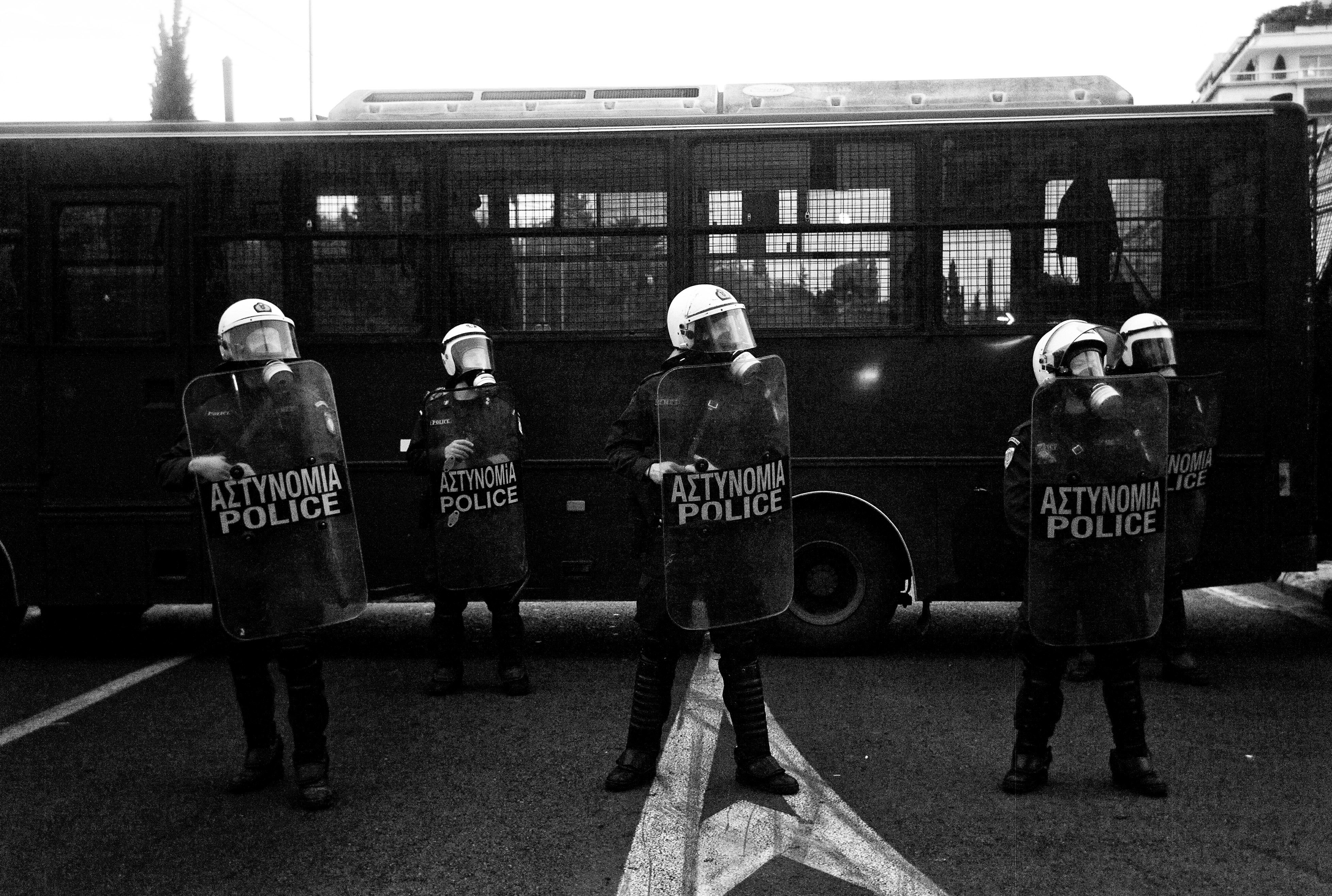
There was a powerful image on the news last night. A woman that looked to be at least 80 years old was seen in the middle of rioting in Athens, pulling a Greek flag away from a young man who was trying to set it on fire – his face covered with a gas mask.
The symbolism is poignant, as it so often is in Greece.
Only a week ago the Greek people were celebrating a victory, as they voted to reject stringent austerity requirements being imposed by the dark and powerful forces in Europe. For so long they have had their domestic policies dictated from Berlin via Brussels, and I can only imagine what it must have felt like to be in Syntagma Square when the results came, to feel like some sort of sovereignty was restored to the people at last.
Last night, the Greek Parliament were forced by those same European forces to implement emergency legislation to adopt even stricter measures than the people rejected in the referendum. Syriza did all that they could by calling the bluff of their creditors with the vote. In the end, they played the best hand they could and lost. There was nowhere else to go: accept the terms or leave the Eurozone.
The last few months of 2014 saw trouble on an almost daily basis in Athens. Annual protests that had seen dwindling turn-outs for years suddenly swelled with those taking to the streets to demand an end to the weak leadership of their Government in the face of increasing demands from the Troika.
The one last bit of hope that those involved seemed to be clinging to was the December election, and the potential for the anti-austerity party Syriza, who marched alongside them, to change the way the game was being played. No more taking things lying down. Seemingly against all odds, they got into power. For the first time in years, the riot police were called off, and the protests turned to demonstrations of support for the new government.
There was hope, but it didn’t last for long.
The scenes of last year will be nothing compared to what happens now that even Tsipras, with all of his abilities has been forced to concede defeat. The truth is that no matter how hard or how well he fought, he just didn’t have anywhere near enough bargaining power to win. Without an incredibly damaging exit from the Eurozone, Greece will be forced to do whatever those holding the purse strings demand.
I fear for what will happen now.
There are plenty who say that the Greeks got themselves into this mess, through early retirement ages and high rates of tax evasion. They shouldn’t just be able to shirk their responsibilities, or ‘have their cake and eat it’.
Corruption has been rife in Greece for decades. Nepotism is the norm. However, in many senses it isn’t hard to see why. The British and Americans helped open the doors for a military dictatorship in the country to avoid Communist influence, and Greece shoulders a hugely disproportionate burden in the number of refugees that it receives as the first port of call into the EU. Historically, ideologically, and geographically, they are caught in the middle, with no support from what are meant to be their allies.
Whatever the history is, the present reality is that the rate of child poverty is above 40%. The rate of youth unemployment 50%. Those who do have jobs have been forced to take huge pay cuts, or even to work for free from months to years simply because there’s no other option. The infamous pensions that have been so criticised have been reduced to almost nothing, with it impossible for those who have previously retired to find new jobs. Greeks work longer hours, and own more of their own businesses than a large number of other countries around the world. The generalisations about them being lazy or greedy simply do not play out.
The idea that somehow the Greek people are themselves solely to blame for this crisis, and that they deserve what has happened is an appalling and reprehensible one. People should not be forced to suffer terribly and indefinitely because of the corrupt actions of their previous Governments – those of whom still live comfortably with the proceeds of past malfeasance.
Even if the fault of what has happened really does lie with the average Greek (which it does not) then there must be a way open for the country to get out of the situation they are in. People must be able to build themselves out of poverty, and sometimes that requires acts of compassion and humanity – not cold blooded market capitalism. This is not happening however, and despite even the IMF declaring that repayment of the debt is impossible without some form of relief, the demands just become greater, all the while earning billions in profit for the ECB.
History repeats itself, albeit in different ways. When African nations struggled to pay back impossible debts built up by corrupt dictators, we marched in the street to ‘make poverty history’. When Germany was faced with rebuilding a broken nation after defeat in the Second World War, creditors (including Greece) wrote off a significant portion of their debt so they could do so. Now, the Greeks are facing an impossible task, and nobody seems to care.
You can lie, you can smear, you can abuse public office for party gain, you can cause a diplomatic incident, you can pauchle your expenses, you can cover up the activities of well connected paedophiles, you can cheat, you can start an illegal war that causes the deaths of hundreds of thousands. Just don’t clap, because that’s beyond the pale.