Category: Scotland

  • On ‘British’ Rights, and the ECHR

    Yesterday, the British Home Secretary Theresa May threw her log onto the fire of the ‘debate’ over the UK’s membership of the European Union; stating that whilst we should remain within the EU, we should withdraw from the European Convention on Human Rights. It’s important to note that the ECHR and EU are two separate legal constructs, and so theoretically you can be part of one without the other.

    Not long after May’s comments were published, a video with Patrick Stewart in it was released, highlighting the various benefits we derive from being a signatory to the ECHR.

    The response to this that I’ve seen from those who dislike the ECHR would make May proud, with statements such as:

    [these are] all rights enshrined in the [1689] British Bill of Rights.

    and

    We had these because of the Magna Carta already.

    Given that it’s becoming a popular riposte in any discussion regarding the UK’s continued acceptance of the ECHR to point towards ancient British legal documents to somehow prove that we know better than the rest of Europe, and should just go back to using the Magna Carta instead, it’s probably time to clear up a few things:

    Bill of Rights 1689

    This ‘British’ Bill of Rights was never actually a British Bill of Rights. It was enacted by the English Parliament before the Acts of Union in 1707. A separate Act was passed shortly afterwards by the Scottish Parliament, titled the Claim of Right Act 1689Good luck reading that if you’re not familiar with auld Scots.

    However, despite the misty eyed pride in which opponents of the ECHR call up the English 1689 Act, it doesn’t actually have much relevance to the ECHR in terms of content. It’s actually far more about the constitutional position of the Crown in a turbulent historical period.

    There is no protection in the 1689 Bill of Rights for the people’s right to be free from torture (Article 3 ECHR), to be free from slavery (Article 4 ECHR), to be free to marry (Article 12 ECHR), or to assemble freely (Article 11 ECHR). There is mention of Freedom of Speech, but it only applies to proceedings in Parliament – not the general ‘subjects’ of the Kingdom.

    The sort of rights that the 1689 Bill is really concerned with are:

    • Outlawing Ecclesiastical courts.
    • Banning the ‘rising or keeping of a standing army’ that could threaten the Kingdom.
    • Protecting the right of Protestants to bear arms (yes, really – so definitely no Freedom of Thought or Religion here, as there is in Article 9 ECHR).

    Whilst the English Bill of Rights of 1689 does formally recognise a few important fundamental rights that lay the groundwork for the frameworks that we have today – such as the freedom and frequency of elections – let’s not mistake or misrepresent it for anything other than what it was: a piece of law designed to protect those that were in power, not the actual people themselves.

    Magna Carta (1215)

    The Magna Carta is another favourite for those who oppose the ECHR. “We don’t need the bleeding heart liberals in Europe telling us what to do! We have the fucking Magna Carta!” (this is a genuine quote).

    There is no doubt that the Magna Carta is a hugely significant legal document, as its international recognition clearly shows. It contains some truly brilliant and beautiful provisions, such as:

    (39) No free-man shall he seized, or imprisoned, or dispossessed, or outlawed, or in any way destroyed; nor will we condemn him, nor will we commit him to prison, excepting by the legal judgment of his peers, or by the laws of the land.

    and

    (40) To none will we sell, to none will we deny, to none will we delay right or justice.

    However, lying amongst the grand and oft-quoted provisions, there are also paragraphs such as the following:

    (46) All barons who have founded abbeys, which they hold by charters from the Kings of England, or by ancient tenure, shall have the custody of them when they become vacant, as they ought to have.

    (48*) All evil customs of forests and [rabbit] warrens, and of foresters and warreners, sheriffs and their officers, river-banks and their keepers, shall immediately be inquired into by twelve knights of the same county, upon oath, who shall be elected by good men of the same county; and within forty days after the inquisition is made, they shall be altogether destroyed by them never to be restored; provided that this is notified to us before it is done, or our judiciary, if we are not in England.

    The Magna Carta is truly an inspirational piece of legal history. It should be of no surprise that it has gone on to inspire legal systems around the world, and used as the basis for hugely important international treaties… including, uh, the European Convention on Human Rights.

    Therein lies the point. We should recognise both the historical importance, and seminal nature of the Magna Carta, without thinking that it is somehow an adequate or appropriate tool to solve the issues of 2016.

    British Rights and Sovereignty

    Whilst people have, and do use the Magna Carta and English Bill of Rights as broad swords to justify pulling out of the ECHR, the real argument being made by people such as Theresa May is that whilst these documents themselves would not be adequate in of themselves, our history shows that we are more than capable of producing law that enshrines protections.

    This line of thought seems more coherent, but is dangerously misrepresentative. The most obvious reason for this is that we already have created a set of rights that applies to the challenges faced today – so much so that the rest of Europe followed suit. British judges were already developing the protections contained within the ECHR through our domestic common law before the Treaty was ever signed, and were instrumental in shaping its inception. This can be made no clearer than with the fact that Churchill himself called for a shared protection for rights across Europe, and led Britain to be the very first signatory of the ECHR. We already have a British Bill of Rights. It’s called the European Convention.

    The response to this of course, is that the ECHR may once have been adequate, but is no longer fit for purpose. The Tories will tell you that the ECHR encroaches upon the ability of the British Parliament to deal with specific issues that we face as a nation today – and that’s why they had to defy the Strasbourg court, continuing to deny prisoners the right to vote. Instead, we need a new British Bill of Rights so that we can’t be told what to do by Europeans. We created rights after all, damnit!

    Even if we accept the argument that the ECHR is no longer fit for purpose (which I do not), to think that we can create some British only version of the Convention that will give us the same protections is nonsense. The great historical documents of the Magna Carta and the 1689 Bill of Rights were brought about primarily to ensure the continued existence of the power structures of the time; they weren’t ever primarily about the rights of the people – and it would be the same situation here.

    The Conservatives are not interested in the rights of individuals; they are intent on removing any barriers that prevent them from doing whatever they please whilst in power. This can be framed in terms of protecting the sovereignty of Britain, but it’s actually about protecting those in power. The rights enshrined in the ECHR protect the British people from the excesses of the British (or any other) state. The only way that they have any power to do this is by existing a level above any single government. A new British Bill of Rights would not be able to do this effectively – as there would be no external pressure, and so irrespective of what went into such a Bill, it would be toothless.

    To close…

    Yes, the UK has been one of the leading voices in history for the adoption of universal human rights, and that is something of which we should be proud. However, we should not and cannot look to the past to demonstrate our ancient achievements in the likes of the Magna Carta and 1689 English Bill of Rights. The natural culmination of these historical developments is in a shared, international acceptance of the basic rights we should have, as protection from the flux of political change and upheaval. This is precisely why the ECHR was used as a crucial part of the Good Friday agreement, helping to bring peace to Northern Ireland.

    If we are going to talk about sovereignty, let’s talk about sovereignty of the people – not the self-serving sovereignty of the British Parliament.


  • Edinburgh Airport Doesn’t Get Privacy

    In Edinburgh Airport. Went to use the WIFI. They apparently don’t understand how checkboxes are meant to work.

    Screen Shot 2015-12-16 at 13.56.15.png

    “I would like to” should never be a compulsory field.

    Just as well I registered with a spambox address eh?

    Get tae.

  • Dear Police Scotland: Get Tae Fuck. Love, a Club Photographer

    Hello.

    First off, I’m not going to talk about the historical relationship between the police and British nightlife. I’m not going to talk about the legality or morality of drugs. I’m not going to talk about the political controversy over a single Scottish police force. I’m not going to talk about the suggestion that clubs are being purposefully targetted for their prime city centre real estate, or the very persuasive allegations that the former Chief Constable of the tendentious single police force – Stephen House – is a wanker. I’m sure you already have opinions on all of that, particularly the latter. I know I do.

    What I am going to do is offer my view as a seasoned photographer (and patron) of nightclubs for around a decade. I’ve worked in all of the usual Glaswegian haunts from the Cathouse, to Bamboo, Garage, Sub Club, and the ill-fated Arches, and I am going to argue that we need to look closely at our city’s nightlife community to see a dangerous trend unfolding that represents a more authoritarian stance from the police.

    Much has been said in recent years about how the ‘Glasgow style’ of police enforcement has been allegedly spreading to other parts of the country, with examples including the crackdown on the saunas of Edinburgh, and the presence of armed police on regular callouts in Inverness. What people fail to realise (or give appropriate attention to) is that this is not a Wegie-centric style of policing, but an entirely new approach in general. This is most evident (as far as I can tell) recently in the position of the police towards licensed premises.

    In the past year or so, I have witnessed a palpably different attitude from the police towards clubs in Glasgow from what existed before. Not long ago, there was a good relationship, with many clubs praised for their low levels of ejections and lack of requirement for calling upon police resources to control their patrons. The basic idea being, that if your security staff can head off trouble before it happens, and/or deal with it effectively when it does arise, then you are doing a good job. Less calls to the police signal a better managed environment – and less burden on the taxpayer.

    Based on this principle, there was hardly ever any reason for the police to step foot inside the private establishments where we go to drink and dance in the wee hours of the morning, unless there was a serious incident. People got on with drinking, and having fun – perfectly legally – and  so long as there wasn’t any real manifestation of violence that couldn’t be controlled or dealt with by the trained (and licensed staff), the high-vis wearing arm of the law kept their distance; and rightfully so. Effective community policing – particularly in a city like Glasgow – is about working respectfully alongside people.

    Now, however, things are different. The police routinely make drop-in visits to clubs throughout the city, in which they take some sort of guided tour throughout the various dancefloors… to eh, well, who knows what? Far from being a friendly visit to check that everything is going smoothly like they may have been in the past, these serve a distinctly different purpose.

    There are two possibilities: either the police genuinely think they are going to stumble upon somebody engaged in some sort of nefarious activity whilst traipsing about in their dayglo jackets and arrest them, or else they are really there to demonstrate a misguided show of force. If the former is correct, then it remains to be seen how it makes any of us any safer. I’d be far happier if they were waiting outside at kicking-out time for the inevitable clashes with drunk passers by, or clamped down on the boy-racer neds who routinely speed out from Mitchell Street onto Argyle Street on weekends to cause trouble, or maybe even dedicated more resources to seriously tackle the 5% increase in reported rapes from 2014 to 2015 (and no, this is not simply down to ‘increased confidence of victims’).

    I personally completely reject the idea that emanations of the State should be able to turn up at private establishments, and walk around with their assorted weaponry in a display of force, giving their approval for the behaviour of people who are socialising and not causing trouble. The only time police should enter nightclubs in this manner is where a crime has been reported – not on some routine ‘inspection’ to swing their self-inflated dicks around. Irrespective of the legal powers the police may or may not have, the question is about what kind of relationship we want to have with them.

    One needs only look to Aberdeen to see the abhorrent practice of police turning up to clubs just before they open, and demanding that anybody who wants to enter has to submit to drug testing. This sort of action is completely unnecessary, and an illegitimate intrusion of the police into people’s private lives – skirting around the requirements of Section 23(2) of the Misuse of Drugs Act for reasonable suspicion.

    If we are not careful, this sort of authoritarianism from the police is only going to increase, and not just in the places where we gather to drink and listen to loud music. It’s worth bearing in mind at this point that Scotland is already subject to some of the strictest alcohol related alcohol laws in the UK, never mind the rest of Europe. How long before drug testing is mandatory to enter any sort of pub? How long before the police expand their jurisdiction to further elements of social society? This aggressive approach is not only a waste of resources, but an affront to everything that we supposedly believe in with regards to the freedom to live without undue interference from the State.

    I don’t know what the strategic agenda is in these ‘drop-in’ visits. I don’t know the political manoeuvrings that are going on in the background. I don’t know if this is really a misguided attempt to curb violence, or to cut down on excessive drinking, or if it’s the hangover of a Stephen House power trip. I don’t know if it’s really an attack on ‘youth culture’, or if it’s somehow a result of David Cameron and that pig. What I do know is that the more time goes on, the more the principle of ‘policing by consent’ is being made a mockery of. Yes, clubs should be safe places – but they largely already are. The presence of the police does nothing but to cause friction where none exists. Our freedoms to congregate are rapidly being eroded for seemingly arbitrary reasons, and nobody really seems to care.

    Dear Police Scotland – get tae fuck.

    2284627949_c2b9d3ca44_o.jpg


  • From the Archives: “Why I am opposed to ‘assumed consent’ for organ donation”

    I used to have one single solitary blog that I’d throw everything onto. Usually photos, but also sometimes a place where my political thoughts would spill over. For years these articles have lived on allmyfriendsarejpegs.com, but not really fitted in – so I’ve decided to slowly re-publish them here so they have a more suitable home. Note that these haven’t been edited since they were posted, and so may not necessarily reflect my current position.

    Why I am opposed to ‘assumed consent’ for organ donation

    First published: 25th October 2011

    Today on the news there was a story around organ donation, highlighting that Scotland has the highest figure of people signed up in the UK at a reported 37% of the population.

    As part of this, the question was again brought up as to whether or not we might move to an ‘opt-out’ system of registration rather than the current one, where people must actively state that they wish their organs to be used after their death where possible.

    I posted on Twitter with my rather blunt opposition to such an idea (something along the lines of fuck that), and was surprised (in a way) to see that there were a number of responses that were in complete disagreement. Rather than reply in bursts of 140 characters, I thought I’d try articulate things a bit better on here.

    What would the change mean?

    The policy that is being advocated is one of ‘assumed consent’. Essentially what this means is that if you die and your organs are able to be used, then it will be presumed that you would agree to such a thing in the interests of saving another person’s life, and they will be taken unless you have specifically stated that you do not wish this to be the case prior to your death.

    So what’s the problem?

    Why should anybody object to such an approach? It seems fairly straightforward surely? What happens to your body upon passing away is of no consequence to you, and if such a move will help increase the number of organs available and in turn save lives, then we should make it happen. After all, if they do have problems with the idea, they can still opt-out.

    However, it isn’t as simple as that, and there are subtle, but profound effects of such a decision. The utilitarian notion of the ‘greater good’ trumping the inconvenience of the few is as flawed here as it is in other ethical questions. To go into examples would be fruitless as it is debated at length elsewhere, and there are deeper questions involved that transcend any idea of accumulated communal wellbeing. In short, just because something may have a positive impact in one respect on a group of people as a whole, that does not mean that it is automatically the correct position to take; far from it.

    Why are rates so low?

    If the donor rates are so low, then why is this? Does that mean that people in society have some sort of moral deficiency? Does the act of not signing up not state exactly what opting out will do, but in a different way? If it is indeed true that people simply don’t have the knowledge, interest, or concern about the topic, then why should the State coerce them into a position that they have no desire to be involved in? By re-stating the question in a different way, do we not just twist the rules of morality to make them acceptable to our own standards, dominating the moral and political narratives that underpin our supposedly ‘free’ society, and ignoring any possible philisophical, ethical, theological or ideological differences?

    Ideology

    There is a massive ideological problem involved in the approach being proposed. There are a whole host of issues that we will set to one side for now, such as those involving how foreign nationals would be dealt with; those with a lack of mental capacity; basic human rights claims; the question of whether consent is really ‘informed’ or not; tensions and relationships with relatives in the event of a dispute… all of which are important, but there is a deeper question about the reach of the State itself.

    By creating such legislation, the Government would in effect be stating that it had an automatic right to ownership of your body (over and above even your closest family), unless you explicitly protest against it. This is an incredibly dangerous road to travel down, and is something that they do not, and should never have the authority to claim. That in of itself is enough to reject the proposal completely.

    We need to read behind the lines in decisions like this, and not just take things on an issue-by-issue basis. The precedent that this assertion would create would conceivably allow future Governments to make further claims on its back, with the steady erosion of control over our own being.

    Implied consent is not a common default with regards to other legal questions, and especially when it comes to matters regarding the body. Interestingly enough, the act (or contract!) of sexual intercourse requires active consent. The exact definition of what that entails is open to legal debate, but there is never assumed consent to engaging in sex. Whilst the comparison may be specious, it’s worth noting our attitude to issues relating to the person as distinct from other contractual matters, and on this hangs the crux: There is something important about the rights of a human being to their own constitution actually belonging to them without having to explicitly make this clear. No person, State or other entity should ever have the arrogance to over-ride this.

    Disclaimer: In the interests of full disclosure, it’s worth noting that I am a registered donor and have been since I was young. This isn’t a question about the value of organ donation in itself, but political interference in the process.


  • Election Night

    It’s almost time. The polls are closing soon, and we’re just a disco nap away from a political all nighter.

    I’ve never been as excited about watching the results of an election before, with the perhaps obvious exception of the independence referendum back in September. 

    Last time around I didn’t even bother to vote in the UK General Election, as I didn’t see the point. I could have voted SNP, but with a general lack of enthusiasm in the rest of the country, it would have made no difference. Whatever I did with my pencil on polling day, Labour would win the majority of seats in Scotland, and the Tories (or whatever Governent England decided on) would inevitably get into power. 

    It turned out to be more interesting than that of course, but by no means brought about a better outcome. Thankfully, things now are a bit different – at least North of the border. Finally, it feels like our votes might actually mean something, and the old duopoly of British politics has been broken.

    I’ll be watching with interest to see if there’s a material difference in turn out between Scotland and the rest of the UK, but the real pleasure will be in something else. Nothing is more satisfying than seeing those in power surprised and afraid of an engaged electorate, and hopefully tonight that will be available in abundance. The old, complacent Labour dynasties who thought they were untouchable will be confronted with the harsh reality: that they have taken their Scottish constituents for granted for too long, and that the jig is up. The seats they felt so safe in before are now down to nothing more than an extremely shoogly peg.  

    I will watch with whisky at the ready to toast the moment when those Labour MPs who voted to invade Iraq, raise tuition fees in England, introduce ID cards, and lie through their teeth about further devolution get punted out on their ear. It’s a day I never thought I would see come to the party’s Scottish heartlands, and one that I’m sure they never thought they would have to face either… But it has. Us Scots are a loyal people, but when you fuck us over we don’t forget it easily. Labour are about to find that out tonight. Come witness the entitled get swept away. 

  • Scotland and the 2015 General Election

    Scotland and the 2015 General Election

    Two weeks from today, those who come under the designation of British will take to the polls to vote for the Members of the UK Westminster Parliament. There are exceptions to this of course, such as those who have already voted by post or by proxy, and those who won’t see the point in participating at all.

    The number of people who end up lumped into the inaccurately labelled category of ‘apathetic voters’ is substantial, a phenomenon common in mature political democracies the world over. This often elicits protestations that the disengaged and disaffected should spoil their ballots rather than abstain, or that there is some sort of moral imperative to cast a ballot due to the sacrifices of those that have come before. These tired old arguments come around like the seasons, and have little discernible effect. The simple truth for many is that there is little point in taking even a symbolic stand if you don’t believe there is any real prospect of change.

    This time may be different.

    It can be easy to forget in amongst the laboriously prosaic campaigning, but this time we find ourselves at a genuinely exciting moment in British political history – whatever the outcome of the election may be. The old assumptions and expectations have been broken down in a way that few people would ever have predicted.

    One of my earliest memories relating to the general election that didn’t just involve getting the day off school was when Tony Blair’s New Labour party were seeking to gain power from John Major’s Conservatives in 1997. The Daily Record displayed a headline that stated: ’18 Reasons We Need a Fresh Breath of Blair’, one for each year the Tories had been in power.

    Back then it seemed like there might be real change afforded by voting for Labour, but of course, that seems almost laughable now. What was on offer was nothing more than the illusion of something different; a choice between two barely indistinguishable parties, cloaked in rhetoric and false promises. This was just the other side of the coin in a bleak partisan system where nothing really transformative ever took place. Nowhere else was this more keenly felt than in Scotland, where each successive election just seemed to confirm that voting had no impact upon the actual result.

    Tony Blair and George Bush

    Now, things seem fundamentally different. The far right has inevitably smartened up enough to present itself as a credible threat in the form of UKIP and Nigel Farage, simultaneously managing to make the Tories appear more rational, whilst also pulling them to promise more extreme action. The Lib Dems have all but completely extinguished their relevance as anything other than a party designed to prop up whoever is in power at any given time and needs a hand – the Parliamentary equivalent of a temp agency. Labour are having an existential crisis, faced with a complete meltdown in their traditionally safe heartlands… and not only do we now have televised debates, but the Greens and Plaid Cymru are represented on there as well (though why Patrick Harvie wasn’t included in Scotland is still a mystery).

    Nigel Farage

    Even the ever dependable First Past the Post system, so desperately lauded by the mainstream parties for its ability to produce sizeable majorities (and therefore allegedly ‘stable’ governments) has failed to achieve even that basic task. The irony of that is compounded by the fact that not only do we have a popular SNP government in Edinburgh, but that they have a majority under a proportional system designed specifically to prevent such a scenario from taking place. Ouch.

    Nicola Sturgeon

    It should not be underestimated how fascinating all of this is, especially when we remember the situation that our American friends are still trapped in. However, sadly the details are at risk of being nothing more than window dressing if it doesn’t actually have the potential to produce real change for people. Whether the Greens are getting on TV a bit more often is irrelevant if it remains the case that they cannot garner enough nationwide support to be in a position to actually make an impact. For many across the UK, this is still the reality they are faced with when deciding how to vote. This is not the case for those of us in Scotland.

    Scotland Westminster

    One of the main underlying issues around the debate over Scottish independence was a dissatisfaction with the status quo; a rejection of the helplessness of the Westminster system that favoured those already in positions of power. People were fed up of being stuck with the Hobson’s choice between red or blue – though it is extremely generous of me to imply that the Tories were ever actually really an option. For many who voted yes, there was a crushing resigned fear that the result would signify a return to the old situation, but it hasn’t. Rather than doggedly stick to supporting a single party in a system that offers no alternatives, for once we are able to vote in such a way that not only will it actually count, but in a way that could also bring about a genuine shift in politics across the UK. Hell, arguably it’s already happened.

    For the first time, our ballot feels like it actually matters again, and that those in Westminster are having to sit up and take notice. You can’t tell the Scottish people that they will be better as part of the United Kingdom and then expect them to not want a seat at the head table.

    Image of Tony Blair and George Bush is in the public domain.
    Image of Nigel Farage from Euro Realist Newsletter used under Creative Commons licence.
    Image of Nicola Sturgeon from the Scottish Government used under Creative Commons licence.
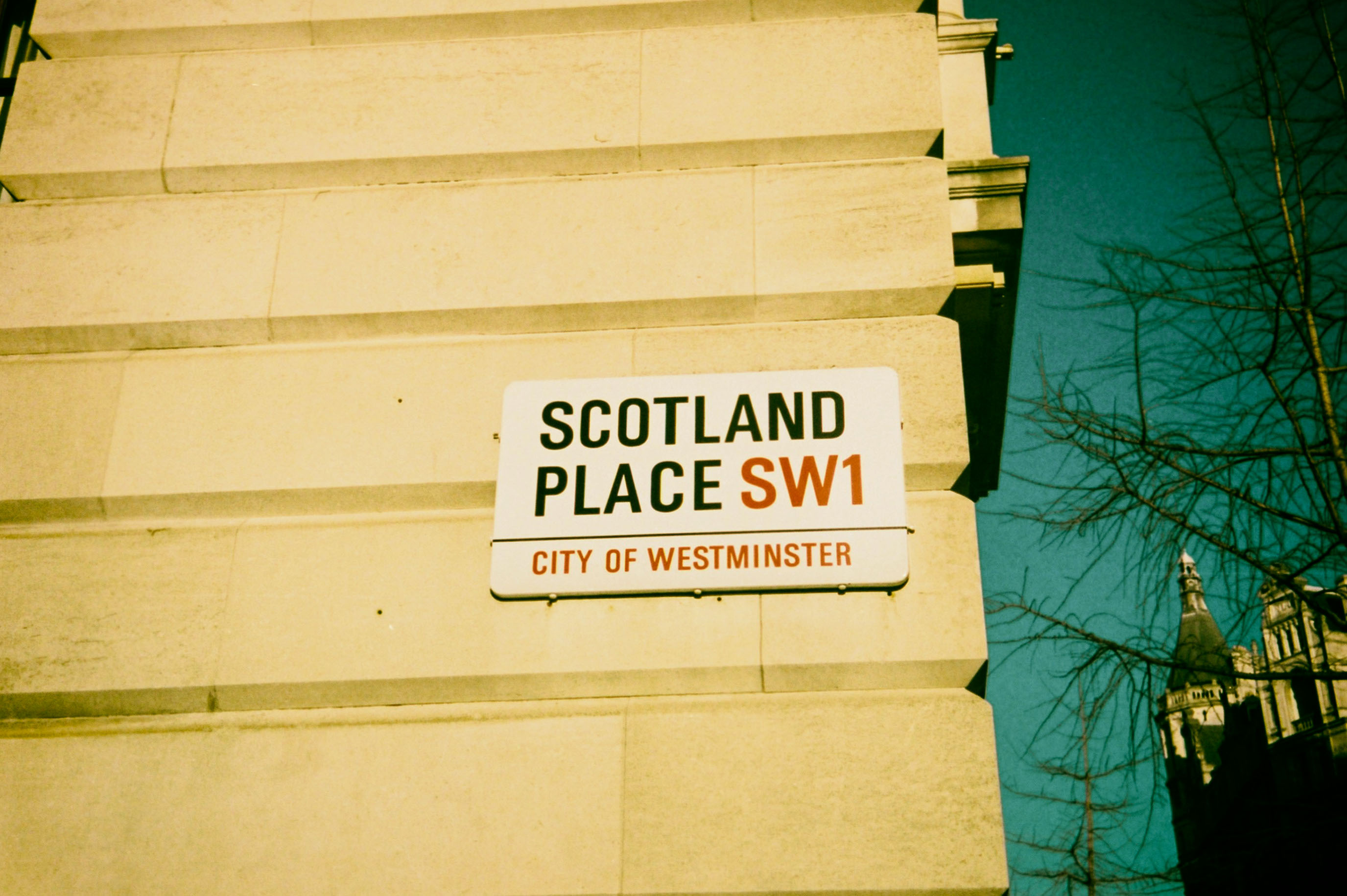
    Image of ‘Scotland Place – Westminster’ by me.

  • The Smith Commission Report

    Today saw the release of the report from the ‘Smith Commission’, which was set up in the aftermath of the Scottish independence referendum to discuss the devolving of greater powers to Scotland.

    This was the result of last minute promises (or ‘the vow’) from the main party leaders in Westminster, in the face of polls that showed a majority of support for Scottish independence.

    The vow, and the Commission itself is shrouded in politics and controversy, but I’ve taken a look through the decisions in the report to see for myself what stands out. I’ve tried to take them at face value with my lawyer hat on, rather than look at any of them from an ideological standpoint that supports independence.

    Here’s what I’ve found:

    The Scottish Parliament

    Screen Shot 2014-11-27 at 13.37.37This is a bit of a strange one. Designed to assuage fears that Westminster would dissolve the Scottish Parliament at a whim, it’s nothing more than a symbolic statement. Whilst it’s true that Westminster could theoretically disband the Scottish Parliament (as it is nothing more than a creature of statute), its existence was already guaranteed as much as it could be by constitutional convention. Even with new UK legislation to state the supposed permanence, the doctrine of parliamentary sovereignty dictates that the decisions of one parliament are unable to bind any other – so it doesn’t bring much to the table that wasn’t already there.

    Elections

    Screen Shot 2014-11-27 at 13.49.06

    This is good news, with the parties looking to bring these changes in in time to allow 16 and 17 year olds to vote in the 2016 Scottish Parliamentary elections. Note that whilst this is a great progressive step that corrects some inconsistencies with our approach to the age of consent in Scotland, the same 16 and 17 year olds will not be able to vote in Westminster elections until they reach 18.

    Screen Shot 2014-11-27 at 13.48.45

    Foreign Policy

    Foreign policy remains reserved to Westminster, which isn’t a great shock really. What’s more interesting is the weak approach to the UK’s involvement with the European Union. When a matter relates to Scotland, the Scottish Ministers views should be ‘taken into account’. We all know what that really means.

    Screen Shot 2014-11-27 at 13.55.42The BBC

    Screen Shot 2014-11-27 at 13.58.38

    Interesting, but nothing to write home about. No mention of the license fee, or any other substantive elements of broadcasting in Scotland. Pretty weak, and something that should have really always been the case.

    Pensions

    Screen Shot 2014-11-27 at 14.00.28

    Remain with Westminster.

    Benefits

    Elements of some benefits payments – such as the creation of new benefits – is being given to Scotland. However, a large number of these remain reserved to Westminster. It’s an area that’s relatively long, and not one I claim to have any great knowledge over, so I’ll defer to others for analysis here.

    Minimum Wage

    Screen Shot 2014-11-27 at 14.09.02

    Stays under the control of Westminster. Can’t have Scotland paying a higher minimum wage than the rest of the UK after all, that would be scandalous. Worth noting that Labour were against giving the Scottish Parliament the power to introduce a living wage. Party of the people, indeed.

    Equality Act 2010

    Screen Shot 2014-11-27 at 14.11.49

    Reserved to Westminster. Whilst it’s important to ensure that Scotland wouldn’t slip below the standards set out in the Equality Act 2010, that seems less of a plausible threat than future Tory governments in London doing the same thing. On balance, I don’t see why this should remain a reserved matter.

    Transport

    Nothing all that notable here, with the exception of one massive devolution of power to the Scottish Parliament of course:

    Screen Shot 2014-11-27 at 14.15.45

    Ahem.

    Fracking

    Screen Shot 2014-11-27 at 14.17.17

    A bit of a surprise one, given the economic importance of fracking. The powers relating to this will now lie with the Scottish Government. I suspect we’ll be hearing more about this though. Watch this space.

    Misc.

    Screen Shot 2014-11-27 at 14.18.58

    Good, but… bizarre.

    Income Tax

    Screen Shot 2014-11-27 at 14.20.33
    This one has received a lot of press attention, but it seems to be a case of wilful blindness to what the powers actually entail.

    • Income tax will continue to exist across the UK
    • The Scottish Parliament will have powers to vary the rate of income tax
    • Any income tax received as the result of an adjustment by the Scottish Parliament will go to the Scottish Parliament

    BUT, note the point at the end of 78: that any increase in the amount of money collected through income tax will be met by a ‘corresponding adjustment’ to the amount of money that Scotland receives through the UK. That means that changes to the income tax levels won’t have any real effect on the actual amount of money Scotland gets. This is a clever way to give the impression of the Scottish Parliament getting more powers, whilst making sure they are toothless with regards to delivering any change.

    Other Tax

    Screen Shot 2014-11-27 at 14.25.40

    Pretty much all reserved to Westminster, with the exception of Air Passenger Duty. Note that this includes oil and gas revenues. No big shocker there.

    Screen Shot 2014-11-27 at 14.26.41

    The costs of implementation of a separate system would have to be passed back to Westminster, making it a fairly unattractive power to implement.

    There are also some changes to VAT, where Scotland will apparently generate income from the first part of any collection, but again this corresponds to a reduction in the amount received from the UK block grant, so it’s not worth even paying any attention to.

    Fuel

    Screen Shot 2014-11-27 at 14.28.34

    You guessed it!

    Summary

    I felt pretty good about the results of the Smith Commission when I read the brief reports coming from elsewhere. I dismissed the cynicism I saw from other pro-independence campaigners as inevitable. However, reading through the report for myself is pretty disappointing.

    • No real new powers devolved to the Scottish Parliament
    • A couple of minor victories with regards to 16 and 17 year olds voting in Scottish Parliamentary elections
    • Some symbolic language, which doesn’t give any further legal status to the devolved organs
    • Headline suitable devolutions of certain taxes, which won’t result in any increase in the Scottish Parliament’s budget

    The last one is the most galling of all. It means that even if they make use of the powers to modify the rate of income tax, the Scottish Parliament won’t actually receive any more money. Rather, it’s the source of the money that will change, rather than any powers over the level. This is a sham designed to deliver good headlines.

    Of course, none of this is binding. Westminster still needs to accept the recommendations, which could be another interesting battle.

    You can download the report for yourself here. It’s not too long – only 28 pages. Worth a read for yourself.


  • Scots Words

    Scots Words

    The Scots language. Something that comes naturally to us, but completely bewilders others when they hear us speak.

    Lots of people (including many Scots) don’t realise that ‘Scots’ is a distinctly separate entity from English – more than just an accent or regional dialect. Just like many languages, there are types that vary both in level and in the time period that they are from. Ancient Greek differs substantially from the Greek that they speak in Athens today, for example. Acts of the first Scottish Parliament were in Auld Scots, and it was something that I had to read as part of my degree.

    Licensed under CC, by demis.nl, via Wikipedia.
    Licensed under CC, by demis.nl, via Wikipedia.

    Unlike back then, the Scots we speak today is irrevocably tied up in English. The roots of many words are the same or similar, and it’s overwhelmingly a spoken language rather than one that would be written down. I’d be hard pressed to even spell half of the things correctly, and there’s no real formal standardisation that I’m aware of.

    As I read recently, it’s probably the case that Scots speak a mash of Scots to each other, but English to others, automatically. It’s why it feels so good to chat to a fellow Scot when you’ve been abroad for a while… The patterns and words you use are completely different when you know the other person will understand you. If you’re not convinced, get even the most ‘well-spoken’ Glaswegian drunk with a group of pals and you’ll see how quickly things change.

    That said, a lot of the words seem to fall out of common parlance, especially amongst those that consider themselves to be middle class, or who go through higher education. If you are constantly measured by your ability to use precise (and correct) language – whether in academia, personal life, or an increasingly globalised workplace – Scots gets pushed to the back of your mind. Some words are dismissed (wrongly) as being nothing more than an accent, or as an improper bastardisation of English… like ‘hoose’, ‘heid’, ‘widnae’, ‘naw’, ‘aye’, or ‘haun’…  whilst others simply become a chore to have to explain to people.

    For me, having spent a lot of time out of Scotland over the past year, and even more time around non Scots, I’ve found myself wondering about these words; the words that I remember fondly from when I was younger. Scots words often fill gaps where English just can’t adequately express how you feel at certain times, and often have a deep emotional connection as a result. The more I am away from home, the more maintaining a cultural connection is important, and the more I want to make sure these words don’t just slip away.

    So, as a result, I’ve decided to make a conscious effort to bring more Scots back into my everyday vocabulary. Part of the whole problem has been that because these words just seem so natural, it’s not always easy to identify which words are actually Scots… or until you realise that you have been avoiding them instinctively around people who won’t be familiar with them.

    To help jog the memory, I’ve started reading some books that are written in varying degrees of Scots, and been noting down some of the words that I remember and want to use more. I’ve listed them below, but haven’t bothered with those that are obvious due to their proximity to English, or that are widely known outside of Scotland (wee for small, gie for give, etc).

    The definitions are my own. You should know that by their nature it’s hard to articulate exactly the feelings behind the words, or when you would use them, but it should give a good idea.

    Birl – Spin around. Like ‘geez a birly‘ – where an adult would pick up a kid by the arms and spin them around really fast. Or when you are birling around at a ceilidh – a traditional Scottish party.

    Close enough.
    Close enough.

    Bosie – This is really a Doric word – a dialect of Scots used in the North East of the country, so not all that common down in Glasgow where I’m from. However, it’s such a great word that I’d be a dafty not to include it. Imagine a hug. Nice, aye? Now imagine having one of your favourite people in the world wrap you up in their arms whilst wearing a huge fleece jumper. That’s a bosie. Warm, safe, and affectionate; the best kind of hug you’ll ever get.

    This is as close as I could find to visually represent what a bosie feels like.
    A bit like this.

    Breeks – Trousers. ‘Yer breeks are fallin’ doon!‘.

    Canny – Careful, smart, cunning. Being clever about how you act. ‘He was aye canny wae how he spent his cash.‘ Like him or not, Alex Salmond was often described as being a canny politician, due to the clever strategies he used to get what he really wanted from the Westminster Government.

    Clype – To tell on somebody/dob them in/snitch on them. Both the act and the person. ‘Don’t clype on yer brother‘, or ‘she’s a wee clype‘. Not a good thing.

    Coorie – Cuddle up, snuggle in. A warm, affectionate word. I associate this with a mouse coorying in to blankets for some reason. ‘Come here and coorie in tae me‘. Should note that this isn’t a sexual thing.

    Crabbit – This is fairly well known, but it’s still great. It means to be in a bad (or ‘crabby’) mood. ‘Stoap bein so crabbit‘, ‘he’s just a crabbit faced git‘.

    Dreep – Means ‘drip’, but I always knew this in relation to a certain way of lowering yourself down off of a wall, to avoid hurting yourself. You’d ‘dreep’ down till you were hanging off by your fingers to reduce the distance to the bottom from your feet. ‘Ahll huv tae dreep ower it‘.

    Dreich – This is a great word, which gets used a lot. Probably unsurprisingly, given what it refers to. It describes the weather, and is for when it’s raining, but more than that; painting a picture of a day where it seems like everything is grey: the sky, the buildings… everything.

    Dreich
    Dreich

    Drookit – Soaking wet. Completely drenched. Almost always due to the rain, or if it’s snowed and then melted… Usually in reference to your clothes when you literally couldn’t be any wetter.

    Fankle – All tied up in a knot, like a tangled mess. ‘The cord’s aw fanklet‘.

    Gallus – Daring, confident, bold, cheeky. I always imagine somebody doing something with a knowing grin on their face. It’s usually used in a positive rather than negative way. Being gallus isn’t a bad thing. Even if somebody is a bit of a ‘gallus prick‘. My pal Kerry loves this word.

    Guddle – A mess. ‘He’s got himself aw in a guddle‘.

    Keich – Not to be confused with the egg pie ‘quiche’, although if you dislike quiche, you could well describe it as keich. Keich means crap. ‘Hahahah you’ve got bird keich on ye!‘.

    Quiche. Picture licensed under CC. By Micah Elizabeth Scott.
    Quiche, not keich. Picture licensed under CC. By Micah Elizabeth Scott.

    Lug – Ear. Often heard when a parent is threatening to give their kid a smack for doing something cheeky. ‘I’m gonnae skelp yer lug!‘.

    Scunnered – Completely fed up, done in. When you’ve had enough and can’t be bothered with something or someone anymore. This word is great for when you’re really at the end of your tether, and nothing else quite expresses it adequately.

    Swatch – If you hear something akin to ‘Haw, geez a swatch!‘ whilst traversing the streets of Glasgow, never fear. It does not mean that the other party wants to nick your over-priced designer watch from you. Rather, it means they want to have a look at whatever you’re looking at at the time.

    Overpriced watches. Picture licensed under CC, by choo chin nian
    Overpriced watches. Picture licensed under CC. By choo chin nian

    Wheech – Onamatopaeic, in that it sounds like what it is when you say it. The only way I can explain this is through an example: ‘Just wheech it over the wall. Naebdae’ll know!‘.

    Wheesht – A command to be quiet, to shooosht. When somebody keeps talking after you’ve said to stop, it’d be fair do’s to say: ‘Wheesht!‘. Also used in different ways though, like to tell someone to ‘Haud yer wheesht.’

    There’s endless amounts more, but these are some of the best. If you’re Scottish, we should definitely make more of an effort to retain these words. Don’t be a walloper; they’re too expressive to let go.

    For a bit more on Scots, check out this great post.