Category: Scotland

  • Spot the difference

    Apparently non British, Irish, or Commonwealth citizens will not be allowed to vote in the upcoming EU referendum in the UK.

    I haven’t read into the actual law on this, just the media coverage, so caveat emptor, but:

    More than 1million foreigners living in Britain will be banned from voting in the EU referendum, the Conservatives have announced, in a significant boost to Eurosceptic campaigners.

    It comes after Eurosceptic MPs confronted ministers over the issue amid concerns that pro-Europeans could effectively rig the result by giving EU citizens the decisive vote.

    (source)

    The language we use is important.

    Isn’t it interesting that here we see people living in the UK described as ‘foreigners’ – setting up an instant division – whilst the Scottish Government during the independence referendum process spoke not of ‘foreigners’, but of ‘the Scottish people’, irrespective of where they were from originally?

    Isn’t it interesting that the result of the independence referendum was based precisely on the votes of the people who lived there, and not some ethnic idea of what Scottishness is supposed to be? Isn’t it interesting that this wasn’t seen as ‘rigging the result’, but as an integral part of it?

    I don’t believe in ethnic politics. I believe in civic politics. Great Britain is a fundamentally racist construct that needs to be dissolved. The sooner the better.

  • Proportional representation won’t save the Union

    Proportional representation won’t save the Union

    In the days following the results of the 2015 General Election, there have been calls from all sides of the political spectrum for electoral reform. Quite rightly, those on the left are both furious at the lack of representation they’ve been afforded at Westminster, and also terrified at the prospect of a future where nobody but the Conservatives will be able to achieve a majority in Parliament. Those on the right aren’t much happier, with analysis showing that UKIP would have had a massive gain in seats under a proportional system, rising from the 1 that they currently hold to upwards of 80.

    Proportional Representation - General Election 2015
    How the BBC visualised the difference

    Of course, this sort of disproportionate result has always been present in previous elections. It’s just that up until recently it has largely been masked by the domination of the two major parties. Cracks in the system began to show with the rise in popularity of the Lib Dems, and are now fully exposed both by the UKIP surge, and the simultaneous demise of Labour in Scotland.

    One of the stated benefits of the First Past the Post System is to produce strong majorities in Parliament, bringing with them political and economic stability. Seemingly against all the odds, FTPT has managed to again achieve that, at least in terms of the numbers involved anyway. Whilst the Tories will be able to hold what’s called the ‘confidence of Parliament’, that doesn’t mean that they hold the confidence of an increasingly fractured United Kingdom. This election has demonstrated a strong need for electoral reform, with some sort of proportional system required to give legitimacy to future governments, but it will not solve the constitutional problems being faced, particularly in relation to Scotland.

    If the UK truly was a single entity, without borders, then PR would provide a solid foundation for people to feel like they are genuinely and fairly represented, irrespective of where they lived. However, that is not the case. No matter how  unpopular it may be to some, we are – to use Cameron’s words – ‘a family of nations’, with distinct and separate identities. Even ardent Scottish Unionists recognise this; a truism that is not just some product of contemporary nationalism, but evident culturally and structurally. People in Scotland support proportional representation, but also want a stronger voice for their nation within the family dynamic. We may just be 5 million people out of 64, but we are also 1 of 4 nations. It is this contradiction that is posing such an issue for the future of the UK. Even with electoral reform, this identity crisis will remain; the Scottish question unanswered.

    Scottish Independence British State

    Another danger lurking underneath the surface of the calls for electoral reform is that the debate may indeed only serve to highlight the differences between Scotland and England, and ultimately expedite the breakup of the Union. In many corners, the questions about PR are posited in terms of reducing the influence of the Scottish, with the thinly veiled question at the heart of things really asking: Why do the Scots have so many MPs with such a small percentage of the population? This isn’t correct, of course – as we would have the same number of MPs whatever parties held them, but it’s easy for the issues to become conflated given the (disproportionate) success of the SNP, and the antiScottish rhetoric that has emerged. To my pro-Union friends seeking a fairer electoral system: beware this trap. Proportional representation won’t save the UK, and if the debate isn’t approached carefully, it could do more damage to the relationship than it will good.


    Header ‘Scottish and British flags’ image by ‘The Laird of Oldham‘ – used under Creative Commons License. ‘Poland-Ball’ style image by ‘Universalis‘ – used under Creative Commons License

  • General Election 2015: The aftermath 

    I’ve just woken up to the sun shining brightly over Loch Ness, as the final results of the General Election trickle in from around England.

    At around 6am I headed to bed with only one Scottish seat left to declare, and its announcement looking likely to bring the total number held by the SNP to a staggering 56 out of 59 possible.

    It’s important to reiterate just how incredible this outcome is. Some of the safest Labour seats in the UK have fallen to the SNP, mere months after a ‘no’ vote in an independence referendum. The seven seat stronghold in Glasgow has been swept aside with seemingly remarkable ease, colouring the city yellow – along with much of the rest of the country. Between them, Labour, the Lib Dems, and the Tories now only have three representatives. The record breaking swings to the SNP were so large that they broke the BBC’s swingometer.

    They weren't expecting that.
    They weren’t expecting that.

    Where once household political names would be relatively safe from such shifts in the political landscape by virtue of their recognisability, it seems like that prominence may only have served to aid in their downfall. Danny Alexander has gone, Jo Swinson has gone, the Scottish Labour Party leader has gone, and the former shadow foreign secretary Douglas Alexander has gone, losing to a 20 year old politics student. It’s fascinating.

    That right Jim, aye?
    That right Jim, aye?

    Even as the losses piled up, Labour Party members seemed unable to deal with the idea that they have fundamentally lost the confidence of the Scottish people – taking swipes at the SNP rather than asking themselves what the hell just happened. Scotland doesn’t belong to Labour, and the continuing failure to comprehend that by entitled politicians has doubtless played a significant part in their downfall. It wasn’t a ‘rise in nationalism’ that crushed Labour, as Ed seems to think. Labour have done this to themselves.

    This isn’t just about standing shoulder to shoulder with the Tories as part of Better Together (though that certainly has been an element), it’s about a complete inability on their part to speak up for Scotland in Westminster: instead, working as a branch office of the British Labour Party. The Scots are fed up of their hollow promises. My now ex-MP who held his seat for 15 years voted to invade Iraq, against any investigation into the war, for national ID cards, and even to raise University tuition fees in England. Typical of the toxic sort of politics that has no place in post-indyref Scotland. Oh, he’s also the one who said that he was ‘bored with politics‘ just last week. Jog on pal.

    What Scotland Looked Like Before
    What Scotland looked like before
    What Scotland Looks Like Now
    What Scotland looks like now

    As the results came in over the night, there was a markedly different mood between my Scottish and English friends. The former were abuzz with excitement and anticipation, whilst the latter despondent and almost disconnected from the whole thing. It’s not hard to see why this might be, given the bleak choice that faced those on the left. Miliband wasn’t just a weak opponent, but one who has spent so much time trying to appease Middle England on issues like immigration that red has seemingly just become another shade of blue. If I was down south, I couldn’t have brought myself to vote for him, tactically or otherwise.

    It may seem strange to be celebrating a landslide SNP victory in Scotland when the Tories are currently finalising a majority from votes in England, but for the Scots, having no real impact on those who hold power in Westminster has always been the case. Given this, seeing real change sweep across Scotland became the most exciting and important thing, not whether we got Cameron, Miliband, or some other cookie cutter Prime Minister that we didn’t vote for anyway. The ‘roch winds blew through the Great Glen of Scotland tonight’. The established political wisdoms no longer apply here, and it’s exciting.

    For all of that though, when the dust clears we will still be faced with the decidedly grim prospect of another 5 years of Tory governance. It’s incredibly unlikely that we will see ‘some sort of federal offer’, as Boris Johnson has suggested. Instead, what we definitely will see is a concerted attack on civil liberties, with the Tory tongues already drooling at the prospect of scrapping the Human Rights Act. We will see more hateful rhetoric around immigrants, with the currently ludicrous and contradictory system being stacked even more against British citizens with non-EU spouses. We will see a referendum in 2017 that could ultimately rip Scotland out of the European Union against the wishes of the people, and directly in the face of that membership being hailed as one of the benefits of remaining in the Union.

    Ultimately, last night was a clear statement of how politics in Scotland have shifted. There could yet be a revolution, but things are going to get worse before they get better. We have a fight on our hands.

  • Election Night

    It’s almost time. The polls are closing soon, and we’re just a disco nap away from a political all nighter.

    I’ve never been as excited about watching the results of an election before, with the perhaps obvious exception of the independence referendum back in September. 

    Last time around I didn’t even bother to vote in the UK General Election, as I didn’t see the point. I could have voted SNP, but with a general lack of enthusiasm in the rest of the country, it would have made no difference. Whatever I did with my pencil on polling day, Labour would win the majority of seats in Scotland, and the Tories (or whatever Governent England decided on) would inevitably get into power. 

    It turned out to be more interesting than that of course, but by no means brought about a better outcome. Thankfully, things now are a bit different – at least North of the border. Finally, it feels like our votes might actually mean something, and the old duopoly of British politics has been broken.

    I’ll be watching with interest to see if there’s a material difference in turn out between Scotland and the rest of the UK, but the real pleasure will be in something else. Nothing is more satisfying than seeing those in power surprised and afraid of an engaged electorate, and hopefully tonight that will be available in abundance. The old, complacent Labour dynasties who thought they were untouchable will be confronted with the harsh reality: that they have taken their Scottish constituents for granted for too long, and that the jig is up. The seats they felt so safe in before are now down to nothing more than an extremely shoogly peg.  

    I will watch with whisky at the ready to toast the moment when those Labour MPs who voted to invade Iraq, raise tuition fees in England, introduce ID cards, and lie through their teeth about further devolution get punted out on their ear. It’s a day I never thought I would see come to the party’s Scottish heartlands, and one that I’m sure they never thought they would have to face either… But it has. Us Scots are a loyal people, but when you fuck us over we don’t forget it easily. Labour are about to find that out tonight. Come witness the entitled get swept away. 

  • Scotland and the 2015 General Election

    Scotland and the 2015 General Election

    Two weeks from today, those who come under the designation of British will take to the polls to vote for the Members of the UK Westminster Parliament. There are exceptions to this of course, such as those who have already voted by post or by proxy, and those who won’t see the point in participating at all.

    The number of people who end up lumped into the inaccurately labelled category of ‘apathetic voters’ is substantial, a phenomenon common in mature political democracies the world over. This often elicits protestations that the disengaged and disaffected should spoil their ballots rather than abstain, or that there is some sort of moral imperative to cast a ballot due to the sacrifices of those that have come before. These tired old arguments come around like the seasons, and have little discernible effect. The simple truth for many is that there is little point in taking even a symbolic stand if you don’t believe there is any real prospect of change.

    This time may be different.

    It can be easy to forget in amongst the laboriously prosaic campaigning, but this time we find ourselves at a genuinely exciting moment in British political history – whatever the outcome of the election may be. The old assumptions and expectations have been broken down in a way that few people would ever have predicted.

    One of my earliest memories relating to the general election that didn’t just involve getting the day off school was when Tony Blair’s New Labour party were seeking to gain power from John Major’s Conservatives in 1997. The Daily Record displayed a headline that stated: ’18 Reasons We Need a Fresh Breath of Blair’, one for each year the Tories had been in power.

    Back then it seemed like there might be real change afforded by voting for Labour, but of course, that seems almost laughable now. What was on offer was nothing more than the illusion of something different; a choice between two barely indistinguishable parties, cloaked in rhetoric and false promises. This was just the other side of the coin in a bleak partisan system where nothing really transformative ever took place. Nowhere else was this more keenly felt than in Scotland, where each successive election just seemed to confirm that voting had no impact upon the actual result.

    Tony Blair and George Bush

    Now, things seem fundamentally different. The far right has inevitably smartened up enough to present itself as a credible threat in the form of UKIP and Nigel Farage, simultaneously managing to make the Tories appear more rational, whilst also pulling them to promise more extreme action. The Lib Dems have all but completely extinguished their relevance as anything other than a party designed to prop up whoever is in power at any given time and needs a hand – the Parliamentary equivalent of a temp agency. Labour are having an existential crisis, faced with a complete meltdown in their traditionally safe heartlands… and not only do we now have televised debates, but the Greens and Plaid Cymru are represented on there as well (though why Patrick Harvie wasn’t included in Scotland is still a mystery).

    Nigel Farage

    Even the ever dependable First Past the Post system, so desperately lauded by the mainstream parties for its ability to produce sizeable majorities (and therefore allegedly ‘stable’ governments) has failed to achieve even that basic task. The irony of that is compounded by the fact that not only do we have a popular SNP government in Edinburgh, but that they have a majority under a proportional system designed specifically to prevent such a scenario from taking place. Ouch.

    Nicola Sturgeon

    It should not be underestimated how fascinating all of this is, especially when we remember the situation that our American friends are still trapped in. However, sadly the details are at risk of being nothing more than window dressing if it doesn’t actually have the potential to produce real change for people. Whether the Greens are getting on TV a bit more often is irrelevant if it remains the case that they cannot garner enough nationwide support to be in a position to actually make an impact. For many across the UK, this is still the reality they are faced with when deciding how to vote. This is not the case for those of us in Scotland.

    Scotland Westminster

    One of the main underlying issues around the debate over Scottish independence was a dissatisfaction with the status quo; a rejection of the helplessness of the Westminster system that favoured those already in positions of power. People were fed up of being stuck with the Hobson’s choice between red or blue – though it is extremely generous of me to imply that the Tories were ever actually really an option. For many who voted yes, there was a crushing resigned fear that the result would signify a return to the old situation, but it hasn’t. Rather than doggedly stick to supporting a single party in a system that offers no alternatives, for once we are able to vote in such a way that not only will it actually count, but in a way that could also bring about a genuine shift in politics across the UK. Hell, arguably it’s already happened.

    For the first time, our ballot feels like it actually matters again, and that those in Westminster are having to sit up and take notice. You can’t tell the Scottish people that they will be better as part of the United Kingdom and then expect them to not want a seat at the head table.

    Image of Tony Blair and George Bush is in the public domain.
    Image of Nigel Farage from Euro Realist Newsletter used under Creative Commons licence.
    Image of Nicola Sturgeon from the Scottish Government used under Creative Commons licence.
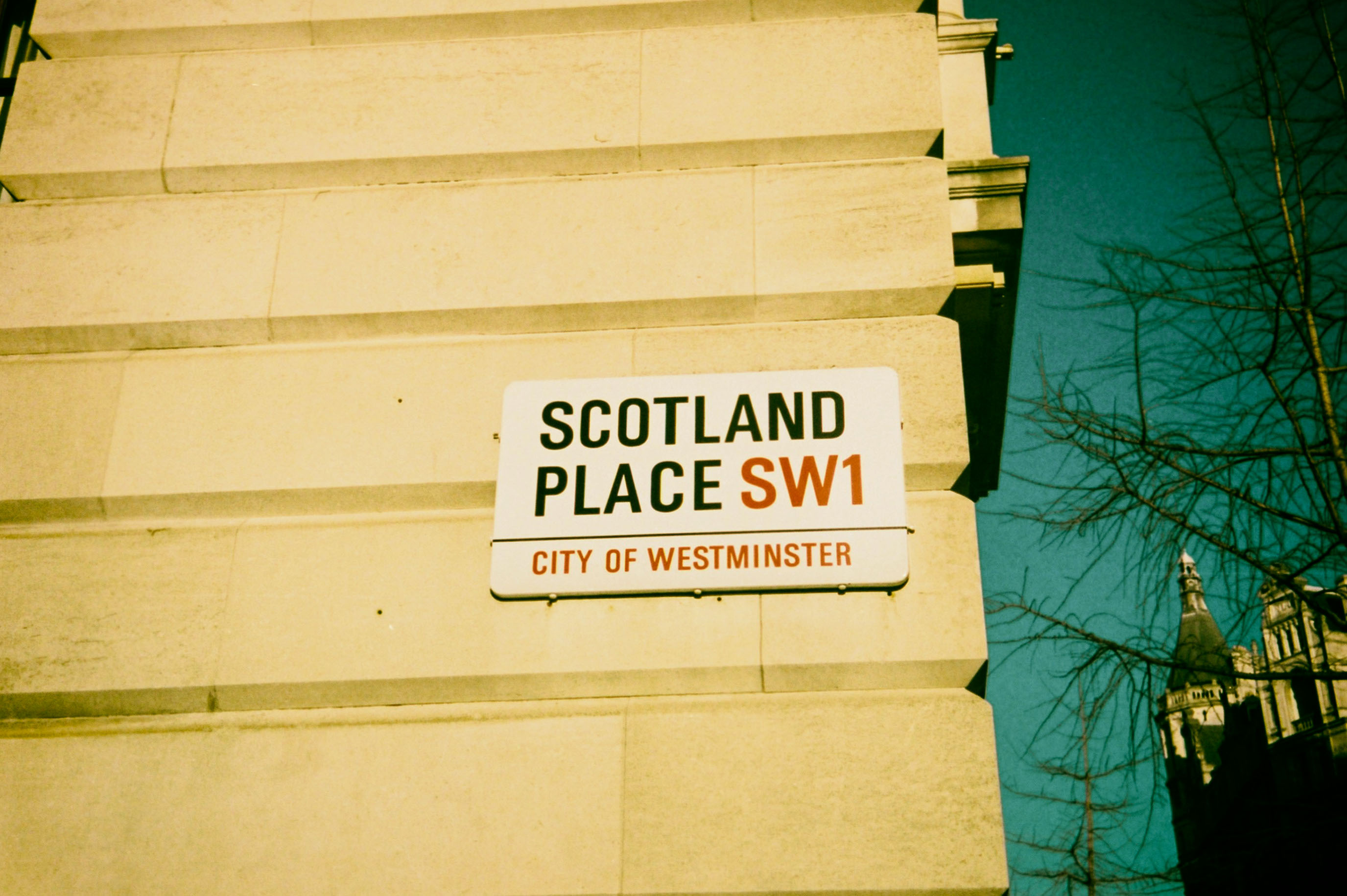
    Image of ‘Scotland Place – Westminster’ by me.

  • The Scottish Government’s Plans for a National Identity Database

    The Scottish Government’s Plans for a National Identity Database

    Over the past couple of weeks, it has come to light that the Scottish Government are holding a public consultation on changes to the National Health Service Central Register (Scotland) Regulations 2006. 

    The NHSCR is essentially a database that holds records on every single person in Scotland who was either born – or registered with a GP – in the country. This is tied to a unique number called the UCRN. Since the bulk of us need to see the doctor now and then – and don’t have private healthcare – that means pretty much all of us is on there. The changes would allow the register to collect some additional information (in the form of postcodes), and then share that data with other public sector organisations.

    The proposed aims of these changes are as follows:

    i. Improve the quality of the data held within the NHSCR

    ii. Assist the tracing of certain persons, for example, children who are missing within the education system and foreign individuals who received NHS treatment in Scotland and left the country with outstanding bills

    iii. Enable the approach to secure and easy access to online services (myaccount) to extend beyond services of Scottish local authorities and health boards to a wider range of public services

    iv. Enable the identification of Scottish tax payers to ensure the accurate allocation of tax receipts to Scotland associated with the Scottish Rate of Income Tax.

    So hold on, how on earth will changes made to a register held by the NHS help trace missing people, or to sort income tax? I’m glad you asked!

    Data Sharing

    Despite being buried away in a seemingly minor consultation in an innocuous piece of legislation, the proposals are actually pretty significant. In essence, they are seeking to use NHS records as a central location for a whole manner of other organisations to track details about people resident in Scotland.

    On the face of it, the sheer dishonesty involved in appropriating a database which has been collected through public trust for other purposes is dismaying enough. However, there are some legitimate aims in there. After all, who could argue with attempting to trace missing children more efficiently? Given the sensitive nature of the information involved, I’m sure that we can expect that the other organisations which would gain access to view and share these types of personal details would be small, and tightly controlled. Right?

    Wrong.

    In the proposed new schedule, there are 98 different organisations listed who would get access to a core set of records. Amongst them are:

    • The Scottish Ministers
    • The Scottish Parliament
    • Revenue Scotland

    Well, okay… not great, but hard to really justify spitting the dummy out over.

    But wait, there’s more:

    • The Foods Standard Agency in Scotland
    • The Drinking Water Quality Regulator in Scotland
    • The Queen’s Printer for Scotland

    Err… what?

    That’s not all though!

    • Glasgow Prestwick Airport
    • Cairngorms National Park Authority
    • Scottish Canals

    and… possibly the best one of them all:

    • Quality Meat Scotland

    Yep, that’s right. Quality Meat Scotland.

    Don’t believe me? See the full list for yourself.

    Now, correct me if I’m wrong, but I see absolutely no reason for these people to have access to my private information:

    Scotsheep 2012 Kings Arms 053

    I’m sure they’re wonderful human beings that do a great job, but when I go to see the doctor about a private matter, I don’t expect that information to then be available to anybody else, especially not a seemingly arbitrary selection of other public organisations.

    Here’s some other possible data exchanges that I find curious:

    • The Forestry Commission sharing information on people with the National Library of Scotland (to find out which books are pulped most, perhaps?)
    • SQA (the exams people) sharing information on people with The Crofters Commission (finding under-qualified Crofters?)
    • Scottish Canals sharing information on people with The Board of Trustees of the Royal Botanic Gardens, Edinburgh (?!?!)

    There are other, more serious potential implications though:

    • The address information of vulnerable people being discovered, or exposed to disgruntled or abusive ex-partners
    • Details of people’s personal medical records (including mental health issues such as depression) being laid bare for others to access – with the potential for discrimination on that basis markedly high

    These possibilities are purely hypothetical at this point, and would arguably be outside of the scope of the proposals in their current form. However, they illustrate the risks that are presented by linking up disparate data-sets in this manner. Once the UCRN is deployed across the public sector, there is little to prevent the above examples from being enabled. The consultation does not the risks that are presented by this, and haven’t given the impression of any sort of detailed consideration about either the privacy implications, or general public interest of this move.

    One would expect there should be detailed regulations in place to control the sort of information transfer being described, yet the consultation remains remarkably quiet on the matter, stating only the following:

    In each of the proposed amendments outlined above the minimum amount of data would be shared for the specific purposes outlined. The organisation will provide information on the individual they wish to identify and will receive equivalent information from the NHSCR and the principal reference number which is the UCRN. Where an organisation wishes to take advantage of this legislation it will also require to have in place data sharing agreements to ensure that appropriate processes are put in place and followed and that the data is used for the specific purpose identified.

    That’s all very well and good, but there is a worryingly scant supply of details on the framework that would ensure these protections would be afforded, or what these ‘appropriate processes’ might be to prevent extra data being shared between organisations without justification. There is also nothing to stop this limited, and disparate set of aims (tracking missing children, establishing a more efficient online user account system for public services, and ensuring Scottish people pay income tax) from expanding in the future to share much more data.

    This is a far bigger issue than it is being presented as.

    Here is a summary of the issues:

    • The proposed changes would create a single national identity database in Scotland
    • There have been no adequate considerations of the privacy or data implications outlined in the consultation
    • There is no way to guarantee that the scope of the data to be shared would not increase in future, once the mechanism is established
    • The changes would undermine the public’s trust in the NHS, by using it as a vehicle to deliver these proposals

    The consultation is woefully inadequate for the significance of these proposals, and the questions framed as if their premise is already universally accepted as a good thing. Almost laughably, instead of leaving space for any potential concerns, the consultation asks about suggestions for other organisations who the data should be shared with. That’s in addition to Prestwick Airport and Quality Meat, for the record.

    The Scottish Government should halt the proposals, and instead move to recognise these changes for what they are: a significant development in our relationship with public sector organisations, requiring a full debate in Parliament, with the chance for both MSPs and the public to scrutinise them.

    Read more from the Open Rights Group on this here.

    Details on the Consultation itself is here. If you’re looking to do so, make sure and get yours in quick, as the closing date is the 25th of February.

  • Smith Commission Burning: Whit an Embarassment

    The latest controversy to hit Scottish politics is a video showing some SNP councillors in Renfrewshire burning a copy of the Smith Commission report. Yup, it seems ridiculous even typing out the words.

    Acting like some sort of idiotic school children, the councillors in question fumbled around outside of Renfrewshire House building to burn a copy of the report, declaring:

    This is what we think about it. No real powers for Scotland again from Westminster. […] There you go Gordon Brown, cheers.

    Before signing off with ‘Happy St. Andrews Day’.

    The video was on Youtube, which the BBC have now grabbed and put on their site here, should you want to watch it. Personally, I wouldn’t bother. It’s embarrassing for anybody frankly, irrespective of what political affiliations they might have. To be honest, it shouldn’t come of all that much of a shock that councillors are acting like complete muppets; I thought that was par for the course in local government.

    The reaction from both sides to this scandal has been revulsive.

    Jim Murphy, ever desperate to be seen as a master orator decried the stunt on Twitter:

    Screen Shot 2014-12-03 at 18.16.34

    I’m not really sure what video he watched, since the twits couldn’t even light the bloody thing properly, so to say that it was torched is a bit of a leap. None the less, this response is patronising bullshit from a man who has divided his own party, and stood on a crate on streets around Scotland literally shouting in the face of people who disagreed with him. Platitudes like ‘Surely it’s time for Scotland to unite.’ simply betray the lack of concern or understanding for the actual political landscape in Scotland. The actions of a few morons do not equate to the position of the SNP, and it’s both boring and disingenuous to bring them together in such a way. They were suspended, for what it’s worth.

    Another tweet doing the rounds came from Jenny Marra MSP (Labour):

    Jenny Marra MSP

    Leaving aside the use of the ridiculous term ‘The Vow’, which sounds as if it is the name of some daytime reality TV show, there’s no question that she’s right on one thing: the whole burning situation was both idiotic, and embarrassing.

    What I find equally embarrassing though, is the idea that somehow the commitment set up by Gordon Brown was ‘promised, voted for and delivered’. What was promised is nowhere near what has been proposed in the Smith Commission (more detailed reading of what’s included is here), and then there’s that key word… proposed. The recommendations in the report will not be ‘delivered’ unless the UK Parliament votes to accept them, and it’s been made clear that that won’t happen until after the next General Election, if it happens at all.

    The idea that everything is now fine and that politicians kept their promises and we should get back in our box and stop complaining is not just ludicrous, but insulting. Even if you think that the Smith Commission has been fantastic, and that control over road signs is the apex of devolution, it’s unthinkable that you would consider it to be ‘delivered’ until it’s signed into law.

    I responded to the retweet of the above from aspiring Labour party candidate and solicitor Cat Headley to query the above. Instead of a reasoned, articulated response that one might expect, instead she chose to attack me directly – saying that I knew nothing about politics.

    It boggles the mind that politicians are so blindsided by tribalism that they will dismiss people who question their statements, or query their position as nothing more than diddies that don’t know what the grown-ups are talking about anyway. Such staggering arrogance is precisely why people are fed up with the entitled attitude towards issues taken by those in political parties. The sooner this contemptuous notion is stamped out, the better.

    Of course, stupid begets stupid. In response to the Jim Murphy’s comments, and the ludicrous idea that ‘The Vow’ has been delivered (‘something near to federalism’, remember?), elements of the other side have gone on the offensive.

    10806318_624988780938909_6889663317495722681_n

    This is in reference to the Labour Party’s decision to lead the UK into war in Iraq under dubious (and illegal) circumstances – specifically in relation to Jim Murphy’s support.

    There’s been a lot of this floating about, and it’s quite simply a dumb response. One does not dismiss a stupid decision made by one group by upping the ante and equating it literally to another tragic political decision in this manner. It’s petty, lazy, and smacks of die hard factionalism. Frankly, if anything is offensive, it isn’t the burning of the Smith Commission report in the bin, it’s the comparison between Jim Murphy’s idiotic words and a war which has resulted in the loss of an inestimable amount of lives.

    The words of Jenny Marra are correct: This incident, and the approach from all sides has been an embarrassment to the Scottish people. Not because of real debates that are being had, but because of the blatant spin, arrogance, and political opportunism demonstrated by all sides in response.

    Get a grip.


  • The Smith Commission Report

    Today saw the release of the report from the ‘Smith Commission’, which was set up in the aftermath of the Scottish independence referendum to discuss the devolving of greater powers to Scotland.

    This was the result of last minute promises (or ‘the vow’) from the main party leaders in Westminster, in the face of polls that showed a majority of support for Scottish independence.

    The vow, and the Commission itself is shrouded in politics and controversy, but I’ve taken a look through the decisions in the report to see for myself what stands out. I’ve tried to take them at face value with my lawyer hat on, rather than look at any of them from an ideological standpoint that supports independence.

    Here’s what I’ve found:

    The Scottish Parliament

    Screen Shot 2014-11-27 at 13.37.37This is a bit of a strange one. Designed to assuage fears that Westminster would dissolve the Scottish Parliament at a whim, it’s nothing more than a symbolic statement. Whilst it’s true that Westminster could theoretically disband the Scottish Parliament (as it is nothing more than a creature of statute), its existence was already guaranteed as much as it could be by constitutional convention. Even with new UK legislation to state the supposed permanence, the doctrine of parliamentary sovereignty dictates that the decisions of one parliament are unable to bind any other – so it doesn’t bring much to the table that wasn’t already there.

    Elections

    Screen Shot 2014-11-27 at 13.49.06

    This is good news, with the parties looking to bring these changes in in time to allow 16 and 17 year olds to vote in the 2016 Scottish Parliamentary elections. Note that whilst this is a great progressive step that corrects some inconsistencies with our approach to the age of consent in Scotland, the same 16 and 17 year olds will not be able to vote in Westminster elections until they reach 18.

    Screen Shot 2014-11-27 at 13.48.45

    Foreign Policy

    Foreign policy remains reserved to Westminster, which isn’t a great shock really. What’s more interesting is the weak approach to the UK’s involvement with the European Union. When a matter relates to Scotland, the Scottish Ministers views should be ‘taken into account’. We all know what that really means.

    Screen Shot 2014-11-27 at 13.55.42The BBC

    Screen Shot 2014-11-27 at 13.58.38

    Interesting, but nothing to write home about. No mention of the license fee, or any other substantive elements of broadcasting in Scotland. Pretty weak, and something that should have really always been the case.

    Pensions

    Screen Shot 2014-11-27 at 14.00.28

    Remain with Westminster.

    Benefits

    Elements of some benefits payments – such as the creation of new benefits – is being given to Scotland. However, a large number of these remain reserved to Westminster. It’s an area that’s relatively long, and not one I claim to have any great knowledge over, so I’ll defer to others for analysis here.

    Minimum Wage

    Screen Shot 2014-11-27 at 14.09.02

    Stays under the control of Westminster. Can’t have Scotland paying a higher minimum wage than the rest of the UK after all, that would be scandalous. Worth noting that Labour were against giving the Scottish Parliament the power to introduce a living wage. Party of the people, indeed.

    Equality Act 2010

    Screen Shot 2014-11-27 at 14.11.49

    Reserved to Westminster. Whilst it’s important to ensure that Scotland wouldn’t slip below the standards set out in the Equality Act 2010, that seems less of a plausible threat than future Tory governments in London doing the same thing. On balance, I don’t see why this should remain a reserved matter.

    Transport

    Nothing all that notable here, with the exception of one massive devolution of power to the Scottish Parliament of course:

    Screen Shot 2014-11-27 at 14.15.45

    Ahem.

    Fracking

    Screen Shot 2014-11-27 at 14.17.17

    A bit of a surprise one, given the economic importance of fracking. The powers relating to this will now lie with the Scottish Government. I suspect we’ll be hearing more about this though. Watch this space.

    Misc.

    Screen Shot 2014-11-27 at 14.18.58

    Good, but… bizarre.

    Income Tax

    Screen Shot 2014-11-27 at 14.20.33
    This one has received a lot of press attention, but it seems to be a case of wilful blindness to what the powers actually entail.

    • Income tax will continue to exist across the UK
    • The Scottish Parliament will have powers to vary the rate of income tax
    • Any income tax received as the result of an adjustment by the Scottish Parliament will go to the Scottish Parliament

    BUT, note the point at the end of 78: that any increase in the amount of money collected through income tax will be met by a ‘corresponding adjustment’ to the amount of money that Scotland receives through the UK. That means that changes to the income tax levels won’t have any real effect on the actual amount of money Scotland gets. This is a clever way to give the impression of the Scottish Parliament getting more powers, whilst making sure they are toothless with regards to delivering any change.

    Other Tax

    Screen Shot 2014-11-27 at 14.25.40

    Pretty much all reserved to Westminster, with the exception of Air Passenger Duty. Note that this includes oil and gas revenues. No big shocker there.

    Screen Shot 2014-11-27 at 14.26.41

    The costs of implementation of a separate system would have to be passed back to Westminster, making it a fairly unattractive power to implement.

    There are also some changes to VAT, where Scotland will apparently generate income from the first part of any collection, but again this corresponds to a reduction in the amount received from the UK block grant, so it’s not worth even paying any attention to.

    Fuel

    Screen Shot 2014-11-27 at 14.28.34

    You guessed it!

    Summary

    I felt pretty good about the results of the Smith Commission when I read the brief reports coming from elsewhere. I dismissed the cynicism I saw from other pro-independence campaigners as inevitable. However, reading through the report for myself is pretty disappointing.

    • No real new powers devolved to the Scottish Parliament
    • A couple of minor victories with regards to 16 and 17 year olds voting in Scottish Parliamentary elections
    • Some symbolic language, which doesn’t give any further legal status to the devolved organs
    • Headline suitable devolutions of certain taxes, which won’t result in any increase in the Scottish Parliament’s budget

    The last one is the most galling of all. It means that even if they make use of the powers to modify the rate of income tax, the Scottish Parliament won’t actually receive any more money. Rather, it’s the source of the money that will change, rather than any powers over the level. This is a sham designed to deliver good headlines.

    Of course, none of this is binding. Westminster still needs to accept the recommendations, which could be another interesting battle.

    You can download the report for yourself here. It’s not too long – only 28 pages. Worth a read for yourself.


  • The ‘Scottish Independence Party’ Are Dangerous Idiots.

    Tonight I became aware of the existence of the so called ‘Scottish Independence Party’. No, not the Scottish National Party, but the Scottish Independence Party – apparently set up by Martin Keatings and Deane Syme.

    EDIT: I have received a legal threat from Martin Keane, claiming that he and Deane Syme had nothing to do with the ‘party’ except for its initial creation. At his request, I have clarified the above sentence, and added this notice. Read more about that here. 

    Haven’t heard of them before now? Nah, me neither. Although going by their Facebook page, it appears that over 34,000 people have liked them previously – presumably for some of the messages they shared during the independence referendum in months gone past. Below is an image taken from their site, describing their mission in a typically self aggrandising manner.

    Scottish Independence Party

    There have been a whole number of groups springing up recently that are claiming to be stepping in to the void where Labour once stood; to be ‘for the people’ like no other organisation has; to ’empower local communities’ and so forth, so this isn’t really a big surprise. On the face of it, the Scottish Independence Party seems like just another group with big ideals who got a decent recognition for sharing some positive messages via social media. Idealistic, naive, and ultimately doomed to failure.

    Tonight however, they revealed their real intentions.

    In a post on Facebook, they set out a list of policy positions that they seemed to be considering as part of their push towards some sort of post-referendum step to formal establishment as a party.

    The post itself seems to have disappeared from their timeline, but is still accessible here (since been removed).

    Have a read for yourselves what they have in mind for a future independent Scotland.

    These are IDEAS for POLICIES which our members have been debating on our website. In no way are these set in stone. We need YOUR help to decide which ideas are good and bad. If we’ve missed anything or if you’ve got an idea you’d like added to the list then please fire away!

    1. Allow teenagers to get jobs at 15 as opposed to 16.

    2. Lower the age to 16 to purchase beer & cider in pubs. (ID required) This will get the youngsters used to drinking so that when they come of age to purchase HARD alcohol from the shops/pubs & nightclubs etc, they won’t obliterate their insides.

    3. All officers will be trained in the use of firearms. They will be required to carry them and will subsequently be armed officers who will the be protecting this country on the frontline.

    4. Remove Police Community Support Officers as they’re a waste of money & require police backup whenever things go south.

    5. Remove the TV licensing fee or lower it as it’s a nuisance and some people struggle to pay it each year.

    6. Lower the retirement age. (Self explanatory really.)

    7. Death Penalties for Murderers & Convicted Paedophiles. (We don’t need them clogging up the prisons.)

    8. Improve the education system despite it being excellent already. (Hands on education/REAL life skills education) – Our education system needs an overhaul. Instead of kids sat looking at a board and being told what to learn and then repeat it in several exams. Learning should be more about on going assessment, asking questions, critical thinking etc and politics should be a part of the curriculum. That way we can take the power from the elite who baffle everyone with jargon and give it to the future generations. Employers are coming out in their droves to complain that kids are coming out of school with no real work place applicable skills. This drastically needs to change.

    9. Get rid of speed cameras & bring in a minimum speed limit, not a maximum speed limit.

    10. Legalise prostitution. This would be done from registered facilities which pay tax. It would allow girls far more protection and could lower disease rates and drug issues linked to the “profession”.

    11. Legalise Cannabis. This includes growing cannabis however DRUG DEALING will still be considered a criminal offence & may get you some time in jail. Honestly, smoking a plant without any added chemicals is considered illegal whereas cigarettes which are known to contain carcinogens are legal. In an ideal world, we’d ban cigarettes but obviously a lot of people would disagree with this. Weed is healthy and has been known to cure things. There have been no deaths from weed EVER yet we see people dying from smoking cigarettes each year.

    12.The prison system needs toughened up. They ain’t in there as a reward so they should stop being treated as such. Strip out the pool tables, games consoles, tv’s etc. This would hopefully stop people reoffending & getting thrown back in jail as it’s an easier ride than everyday life. If we removed all the gear then they would be dreading going back to prison.

    13. Voting for 16 year olds.

    14. Set up an oil fund.

    15. A number/licence plate system for cyclists as well as an insurance system for bike riders. We can identify all other vehicles on the road but there is no way of knowing who is riding a bike if they happen to do something they shouldn’t.

    16. Allow terminally ill patients to have euthanasia as an option. It’s rather condescending that those without any conditions or terminal illness are the ones who make the decisions regarding those living in severe pain etc. Just as life is a human right then choosing to end your own should be a right also.

    This would not be for those suffering depression or having a bad day at work. It would be for people medically diagnosed with terminal, progressive and/or debilitating diseases.

    17. Publicly owned services. Public railway,public water, public energy, public oil etc.

    18. A nationalised central bank with our own currency. (Suggested by someone in the comments below.)

    19. All workers should get a single minimum wage. An 18 year old pays the exact same prices as a 30 year old so why should they not earn the same amount for the same job. Just as females should be paid the exact same as men for the same job. (Suggested by someone in the comments below.)

    20. Reduce poverty with the eventual aim of no more food banks. ( Suggested by someone in the comments below.)

    21. Legalise handguns, rifles etc. (Not semi-auto or fully auto rifles, only bolt action)

    22. Possibly bring back National Service in the event of an Indy Scotland. (Have to serve between 6-12months in either the Army, Marines or Navy etc.)

    23. Child benefit and all associated money capped at 2 children for people who ARE NOT working. (Families earning tens of thousands a year just for having several kids is not fair on working families or the system as a whole.)

    24. Mandatory driving re-test for old age pensioners (Free of charge by the government) so that they understand all the current driving laws and don’t possess a risk to other motorists or themselves.

    25. Segregated schools – What this means is that any pupil who is out of line or unwilling to learn gets three chances to show that they’ve been good in class. If they continue to disrupted then they’ll be placed into a completely different section of the School with the rest of the idiots and kids who think they can disrupt the learning of others. Basically, this would mean that the people who want to learn are able to do that in a controlled environment and those who wish to muck around can be sectioned off elsewhere. Once the kids who have been disruptive or not engaging in class work have improved their overall attitude to school & class work, they can be placed back in their previous class.

    26. No Nuclear Weapons on Scottish Soil.

    27. Protection for the sick, weak & vulnerable.

    28. Better pension & state benefits.

    29. No lords that govern Scotland.

    30. Make sure that all school children are able to play a musical instrument for free as well as helping students with grants etc.

    More policies are likely to be added & some will be improved on. This is just a very basic list of CONCEPT IDEAS for POLICIES so bear in mind that everything is subject to change.

    That’s right. Should this bunch of lunatics ever manage to drag themselves up from the mud long enough to actually form some sort of coherent political force, it’s reassuring to note that they would primarily be fighting for those extremely important causes to the ‘needs of the people’ such as eh, bringing back the death penalty, enforcing a minimum speed limit, and who could forget… legalising rifles. (Not semi-automatic or automatics though; that would just be silly.)

    The complete lunacy of what is contained above is so far beyond the grasp of any sane person that it’s not worth even considering in any further detail. Whilst one or two of these might seem controversial, yet acceptable, in isolation, the cumulative total of even a portion of the ‘concepts’ to be found within are enough to give fundamentalists on all sides of the political spectrum wet dreams and nervous glances.

    So what’s the problem? They’re muppets. Big deal.

    The real danger of the Scottish Independence Party is that they have managed to garner such a prima facie establishment of credibility through the high numbers that have ‘liked’ or ‘followed’ their page. On my own friend list there was about ten people who, upon seeing the list published above, immediately removed their connection – embarrassed at the association. Some of them didn’t even realise they had inadvertently liked the page at some point in the past, probably having done so after seeing a passing post related to the #indyref, and an overall positive surface message with which they could relate.

    The Scottish Independence Party will tell you that the policies above are merely suggestions by members to be discussed, and that they are giving an open platform for people to get involved in politics, rather than to have ideas shot down at the first hurdle based on ideology or controversy (Indeed, they have edited their statements multiple times to – at least attempt – to make this clearer). However, what they won’t tell you is that they are actively moderating the comments on their post to ensure that dissenting voices are not heard. If you wish to question why the suggestion that homosexuality should be re-criminalised won’t be added, for example, you would find yourself blocked, and the criticisms removed.

    Everyone has the right to hold and express extreme ideas. That’s not the issue here. What’s dangerous about the Scottish Independence Party is that they are operating under a false veneer of credibility to peddle selectively chosen, ill-informed, non-sensical and fundamentalist positions; censoring those who call this into question; and doing so whilst claiming to give a voice to the voiceless.

    Scottish Independence Party

    and eh, who are these chumps? Some sort of edgy upstarts threatening to up-end the Scottish political apple cart? This comment on Reddit sums it up:

    Scottish Independence Party

    Check the list of pages you like. You might be surprised.

    You can see which of your friends likes them by following this link:

    https://www.facebook.com/browse/friended_fans_of/?page_id=292488674289406

    You may wish to give them a heads up.

    Ditch the dangerous idiots that are the Scottish Independence Party.
     

  • The End of Poll Tax – and Scottish Labour

    It’s been tough to keep up with the developments in the past week, and even tougher to get time to sit and write about them. It’s as if politicians who advocated for a No vote in the independence referendum have seen things not only as a relief, but an active endorsement to pursue even further controversial measures. Hopefully time will prove this to be a mistake on their part.

    Labour Councils to Pursue Poll Tax Debts

    Firstly, we watched with incredulity as Labour-led councils announced that they would be using the increase in voter registrations prior to the independence referendum to check for those who may owe money from a refusal to pay the unfair Community Charge (aka poll tax) that was levied by the Conservative Thatcher government over 20+ years ago. (#) (#)

    It’s almost unbelievable that this was even floated in Scotland, let alone accepted by the Labour party, who have repeatedly used the issue as a reminder of unjust governance. The strength of feeling about this particular issue is one of the reasons why the Tories have been effectively wiped out in terms of Scottish votes ever since. (To be clear, Conservative council leaders in Aberdeen were some of the first that floated this particular idea, but to accuse them of idiocy seems like a moot point. The hypocrisy of Labour is what is particularly galling.)

    Poll Tax Limitation, and Writing Off Debt

    Thankfully, the outgoing First Minister Alex Salmond announced that legislation would be brought forward to prevent this from happening:

    Screen Shot 2014-10-02 at 23.26.12

    I’ve seen references online from those who seem to think that this was unnecessary, as councils would be unable to pursue debts of this age under Scots law anyway – something that isn’t strictly true. Whilst  Salmond’s assertion that it would be illegal for councils to start new proceedings against people they have never previously had interactions with (as evidenced in this devastating exchange with the Aberdeen Tory Councillor) is correct, the Prescription and Limitation (Scotland) Act 1973 allows for a significant length of time past the original 20 years to collect poll tax owed. This is dependant on a variety of factors – including whether or not the obligation itself has been acknowledged. (s.7(1)(a)-(b)) In other words, the period of prescription is not fixed, and it is therefore possible that councils could manage to claw back some income in certain limited situations. Whilst important to note the slim chance involved (and hence the need to legislate), the likelihood of any income being generated from this route seems to be mostly fantasy.

    ‘Tax Dodgers’ Charter’

    Others have decried this move as a ‘tax dodgers’ charter’, seeing it as a potential loss of hundreds of millions of pounds to local councils at a time when budgets are increasingly being squeezed.

    This is ludicrous.

    The money in question should never have been levied as a tax in the first place. Those who had the courage to refuse to pay at the time were an integral part of the reason that the disastrous experiment was abandoned just a few years later. The idea that they would now somehow have a change of heart after a couple of decades is preposterous – presuming, of course, that they are even still alive.

    You can’t lose something that you never had in the first place.

    This, by the way, is what the Scottish Conservatives (that titan of a political force) had to say:

    The Scottish Conservatives said effectively cancelling poll tax debt raised “many unanswered questions” and claimed many people in Scotland would be “astonished” to have a government “which is basically advocating not paying tax”.

    (source)

    It’s worth noting that unpaid poll tax debts have been effectively written off in England, due to the differing laws regarding prescription and collection. To suggest that Scots should have to pay back unfair debts that have already ceased to be collectible in England and Wales is clearly nonsense. It’s exactly this sort of uninformed attitude that increases the tension and calls for independence in the first place.

    Tax and the Electoral Roll

    The right to vote should not come along with an obligation to pay the state for the privilege. This is something that has already been well fought and established. It is true that councils have an obligation to pursue tax that is owed, as a creature of statute. However, to go after voters who have been freshly re-engaged in politics because of the independence referendum, in order to attempt to collect a tax that is all but dead is despicable. Rather than choosing to highlight the issue to the Scottish Government and attempt to have the law changed, Labour have instead attacked the very people that they are meant to stand up for.

    Their relevance in Scotland is rapidly coming to an end.